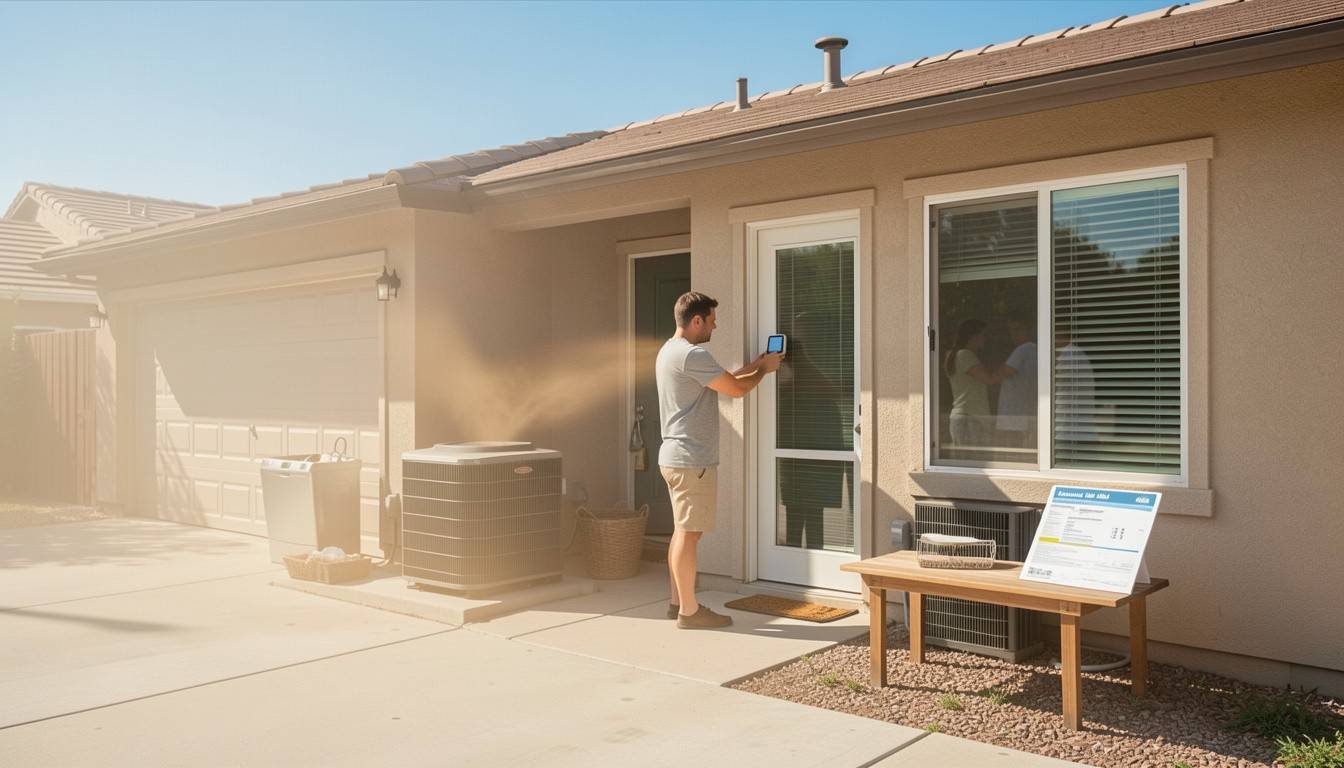
A California heatwave can spike your utility bills in a few days. Your air conditioner runs longer, your refrigerator works harder, and your daily routine often lands in expensive time windows. California also has high residential electricity rates, so small efficiency losses can show up fast on your monthly bill.
You can still lower your utility bills during a heatwave. You need a plan that cuts cooling load, shifts energy use out of peak hours, and fixes the equipment issues that force long runtimes.
Why heatwaves spike bills in California (2026 reality check)
Heat drives longer AC runtimes. Your home absorbs heat through windows, doors, attic space, and walls. Your AC then removes that heat, hour after hour.
The grid also strains in late afternoon and early evening. Solar output drops as the sun sets, but AC demand stays high. That is why you often see conservation alerts during extreme heat and why peak hours can feel extra expensive.
What “utility bill” means in 2026: kWh charges, TOU windows, and fixed charges
To lower your bill, you need to know what you can control.
- kWh usage: This is the energy you consume. AC runtime, dryer cycles, and a struggling fridge add kWh quickly.
- TOU timing: Many plans charge more in late afternoon and evening, so the same kWh can cost more at certain hours.
- Fixed charges and fees: You cannot reduce these much, so your biggest wins come from lowering kWh and shifting usage.
If you run a business, ask your utility if your plan includes demand charges. Demand charges can rise after one high-load period, even if your total kWh stays similar.
The biggest lever: time-of-use behavior (what to run, and when)
If you want the fastest savings, shift your high-draw appliances out of peak hours.
Run these outside the expensive window when you can:
- Dishwasher
- Washer and dryer
- Long oven cooking
- EV charging
- Heavy shop tools and garage projects
Here is the heatwave rule that helps you decide fast. If an appliance adds heat indoors, you pay twice. You pay to run it, and you pay again because your AC must remove that heat.
If you want a local checklist of habits that raise bills without you noticing, read: Top 5 energy-wasting habits in Murrieta homes.
Heatwave triage checklist (first 60 minutes)
Use this checklist the moment a heatwave starts. You can do it in under an hour.
- Set a realistic thermostat target
Pick a setting you can maintain. A stable setpoint often costs less than repeated big swings. - Block sun early
Close blinds and curtains on the sunny side before the afternoon sun hits. West-facing windows often drive the largest indoor heat gain. - Pause indoor heat sources during peak hours
Avoid laundry, oven cooking, and long dish cycles during peak pricing windows. - Check your HVAC filter
A dirty filter reduces airflow. Low airflow increases runtime and can raise your cost. - Check vents and returns
Move furniture away from supply vents. Keep return grilles clear so air can flow back. - Use fans in occupied rooms only
Fans cool your skin. They do not cool an empty room. - Do a quick refrigerator and freezer check
Keep doors closed, confirm seals feel snug, and avoid long door-open searches for food.
Thermostat strategy that actually saves money (and common myths)
Your thermostat can save money if you use it with a schedule that matches heatwave pricing.
What works
- Pre-cool before peak hours. Cool the building slightly before the expensive window. Then raise the setpoint a few degrees during peak.
- Use small changes you will keep. A 1 to 3 degree increase during peak often feels fine if you use fans and block sun.
- Use Auto fan for most setups. The fan runs when the system needs it. Continuous fan can raise energy use in some cases.
What does not work
- You crank the thermostat down to cool faster. Most systems cool at a steady rate. A lower setpoint does not usually speed cooling. It just makes the unit run longer.
- You shut the AC off all day with no plan. Your building heats up. Your system then runs hard later, sometimes during peak pricing.
If you want help choosing equipment that handles Murrieta heat better, see: Choosing the right HVAC system for Murrieta’s microclimate.
HVAC airflow basics: filters, vents, returns, and why closing vents can backfire
Airflow drives comfort and efficiency. When airflow drops, your AC runs longer for the same result.
Do these basics:
- Replace filters on schedule.
- Keep supply vents open and clear.
- Keep return grilles clear.
- Keep the outdoor condenser free of debris and give it breathing room.
Many people close vents to push air into one room. That often backfires. Closed vents can raise duct pressure and reduce total airflow. The system may cool less and run longer.
If one room stays hot, you usually need duct balancing, attic insulation, shading, or a zoning plan. You do not need a vent-closing habit.
Peak-hour cooling tactics: fans, shading, and heat-gain control
You lower bills when you lower the heat your AC must remove.
Use fans the right way
Point the fan at people, not hallways. Turn it off when the room is empty.
Shade the building early
Close blinds before the sun hits. Add curtains if the room overheats daily.
Reduce indoor heat sources
Skip the oven during peak hours. Use a microwave, air fryer, or grill when you can.
The hidden hogs during heatwaves: dryers, ovens, dishwashers, and extra fridges
AC costs dominate, but your appliances can push costs up fast.
Dryer
A dryer creates heat and pulls high power. If it takes longer than normal, it can quietly drain money.
Action steps:
- Use high spin on the washer to reduce water left in fabric.
- Clean the lint screen every load.
- Watch for long cycles and hot laundry rooms. Those often signal poor vent airflow.
Oven and stove
Long cooking heats the kitchen and nearby rooms. Your AC must remove that heat.
Dishwasher
Heat-dry can add both electricity use and indoor heat. Use air-dry when it works for you and run the unit off-peak.
Second fridge or garage freezer
Garage temps in Murrieta can get brutal. Those units run longer and cost more.
Action steps:
- Leave space around the unit for airflow.
- Clean condenser coils.
- Limit door openings during peak hours.
For more local context, see: How the California climate impacts your appliance lifespan.
Refrigerator and freezer steps that cut costs without risking food
Your fridge and freezer run all day. Small improvements matter.
Do this today:
- Check door seals with a paper test. A loose seal leaks cold air.
- Clean condenser coils if they are dusty.
- Keep airflow paths clear inside the fridge.
- Let hot food cool before you store it.
Avoid risky temperature changes
You can save money without raising temps into unsafe ranges. Food loss costs more than a few saved kWh.
Laundry cost control: cold washing and dryer vent performance
Laundry gives you quick wins because you can change timing and settings today.
Washer
- Use cold water for most loads.
- Run full loads when you can.
- Use higher spin to reduce dryer time.
Dryer
- Use sensor dry if your unit has it.
- Clean lint every load.
- Stop running it during peak hours if possible.
If your dryer runs two cycles for one load, you likely have a vent restriction or a heating issue. That is not normal. A repair can cut runtime and lower cost.
Dishwasher and hot water: cycle choices, air-dry, and timing
Run the dishwasher outside peak hours whenever you can. Use eco modes if cleaning stays good. Use air-dry to reduce heat and power use.
If the dishwasher leaves food behind, do not rerun the load as your default. You will double the energy and water use. Clean filters and spray arms first. Then address drain or inlet issues if the problem persists.
No-oven cooking swaps that lower indoor heat
During a heatwave, you want fewer indoor heat sources.
Try these swaps:
- Microwave for reheating and quick meals
- Air fryer for small batches
- Grill cooking to keep heat outside
- Meal prep in the morning so you avoid peak-hour cooking
You will feel the difference because your AC will cycle less.
Why maintenance saves money during a heatwave
A heatwave exposes weak points. A small efficiency drop turns into a big bill.
Common energy leak problems:
- Dirty HVAC coils
- Clogged filters
- Weak duct airflow
- Dirty refrigerator coils
- Dryer vent restrictions
Maintenance reduces runtime. Runtime drives kWh. kWh drives your bill.
Repair vs replace math (simple payback you can use)
You can make a solid decision with a simple approach.
Step 1: Identify the waste
Look for symptoms that add runtime, like long dryer cycles or an AC that runs nonstop.
Step 2: Track the pattern for 3 to 7 days
Note runtimes and timing. You want proof before you spend.
Step 3: Compare the cost paths
A repair makes sense when it restores normal operation at a reasonable cost. A replacement makes sense when repairs repeat, performance stays poor, or the unit nears end-of-life.
If you run a business, include downtime cost. A hot space can cut productivity and customer comfort.
Smart tech and automation in 2026: what works and what doesn’t
Smart tools save money only when they change your routine.
What works:
- A thermostat schedule that raises setpoints during peak
- Alerts that tell you when runtimes spike
- Smart plugs for scheduling non-critical loads
What does not work:
- Buying devices and never changing settings
- Aggressive schedules that make you uncomfortable, then you disable them
Conservation alerts and how to use them
During extreme heat, California sometimes issues conservation alerts that ask you to cut usage during a set window.
Use a simple plan:
- Pre-cool earlier.
- Raise setpoints during the alert.
- Avoid laundry and dishwashing.
- Turn off non-essential lights and devices.
Solar and batteries in 2026: why timing matters
Solar can lower costs, but savings depend on when you use power. If your usage happens after sunset, you may need load shifting to get strong results. A battery can help you cover peak hours with stored energy, but you still need cost math.
Even without solar, you can still cut bills with the steps in this guide because they target timing, heat gain, and equipment efficiency.
Apartment and renter playbook
You can still lower bills as a renter.
- Close blinds early.
- Use fans only when you are in the room.
- Avoid peak-hour laundry and cooking.
- Ask for filter changes and thermostat fixes if HVAC performance feels weak.
Commercial playbook for Murrieta: avoid spikes and stage loads
Commercial bills can punish spikes.
Do this:
- Pre-cool before peak.
- Raise the setpoint slightly during peak.
- Stagger equipment starts so everything does not kick on at once.
- Keep doors closed when possible and manage entry points.
If staff complains about heat, do not default to lowering the thermostat. Fix airflow and hot spots first. You will keep comfort and cut cost.
Realistic savings: what works and what rarely moves the needle
High-impact steps:
- Shift appliance use outside peak hours
- Block sun and reduce indoor heat sources
- Fix airflow and equipment issues that extend runtimes
Low-impact steps:
- Big thermostat swings that cause rebound cooling
- Closing many vents
- Small gadgets that do not change behavior
Safety and comfort guardrails
You should not trade health for savings. Drink water, use fans, and check on vulnerable people.
If your AC cannot hold a safe indoor temperature, you may have a mechanical issue. A repair can cut wasted power and reduce breakdown risk during the next heatwave.
If you plan an upgrade this year, check what incentives may apply first. See: Energy rebates available for Murrieta homeowners in 2026.