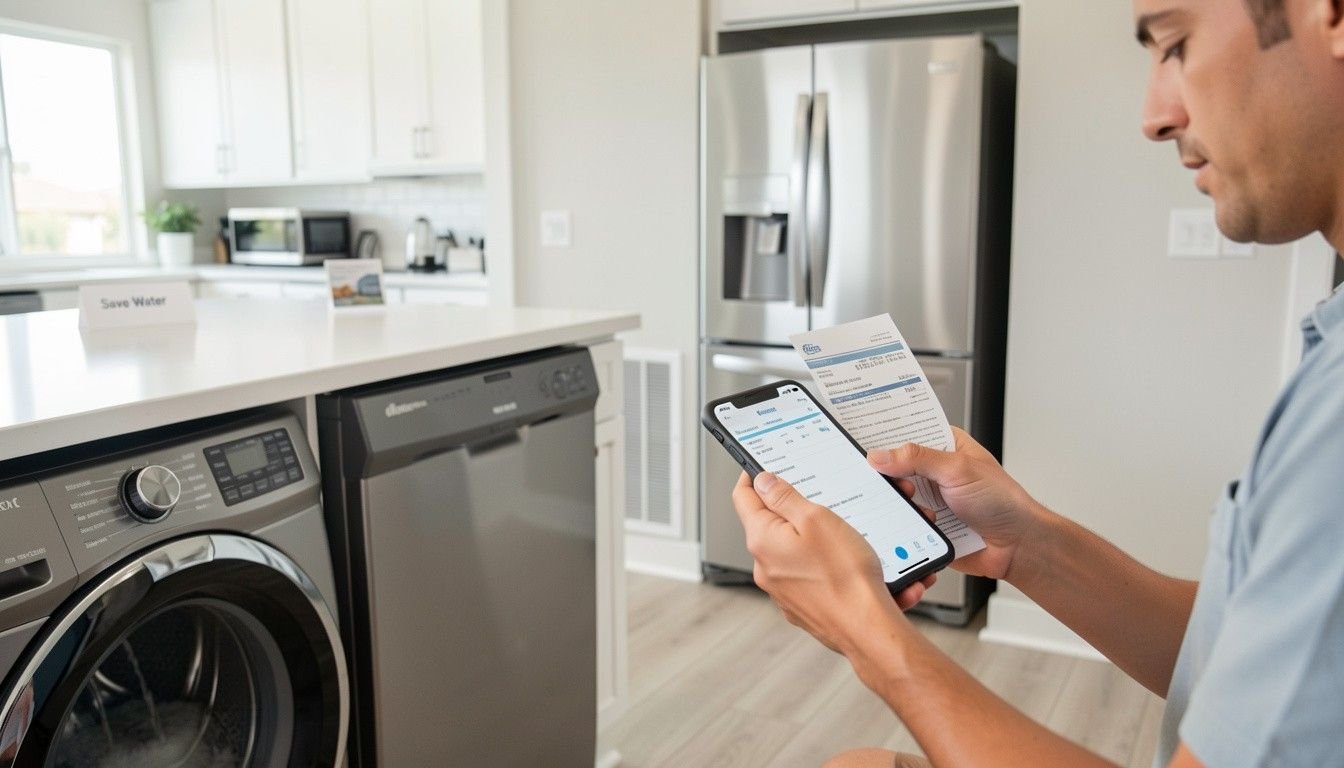
Eco-friendly appliances do two simple things. They use less water. They use less energy. In California, that matters because power costs stay high, drought rules stay strict, and summer heat pushes AC run time up.
If you live or work in Murrieta or anywhere in Riverside County, you can save real money when you choose efficient appliances and keep them running at peak performance. This guide shows you what “eco-friendly” really means in 2026, what upgrades pay off, and how to avoid purchases that look green but waste your cash.
What “eco-friendly appliances” means in CA in 2026
In 2026, an eco-friendly appliance must do more than look modern. It must meet three practical goals.
- It cuts your kWh use, especially during peak hours.
- It cuts your water use, without forcing repeat cycles.
- It supports healthier indoor air, especially when you reduce combustion in living spaces.
California also uses efficiency rules that affect what retailers can sell and what you can install. Those rules often reference Title 20 and state efficiency databases for appliance compliance.
Your best approach is simple. You pick appliances that meet CA requirements, carry credible labels, and match your real usage pattern.
Why California pushes efficiency (and why you should care)
California pushes efficiency because it works. Efficiency reduces grid strain during heat waves. Efficiency reduces water demand during drought cycles. Efficiency also lowers monthly bills for homes and businesses.
For you, this is not a politics topic. This is a monthly cost topic. An efficient appliance costs less to run each day. Over time, that gap becomes a big number.
If you want a local example of how timing and high heat drive bills, read: How to lower your utility bills during a California heatwave.
California rules that affect what you can buy and install (Title 20 basics)
California appliance efficiency rules can block non-compliant products from sale in the state. Energy Code Ace explains how CA appliance efficiency regulations work and why compliance matters for builders, retailers, and consumers. It also points people to tools and resources that support compliance checks.
You do not need to memorize regulations. You just need a buying checklist. You confirm the model meets CA requirements before you buy, especially if you shop online or buy from an out-of-state seller.
Labels that matter: ENERGY STAR, “Most Efficient,” and what they signal
ENERGY STAR is a practical starting point because it maintains a list of product categories and certified products. ENERGY STAR also provides category pages, like refrigerators, that help you compare efficiency features and product types.
Here is the shortcut:
- You use ENERGY STAR to narrow your choices fast.
- You then compare capacity, features, and your usage pattern.
- You avoid overbuying features that add cost but do not reduce energy or water use.
For dishwashers, DOE also offers guidance on dishwasher energy and water use and what impacts performance.
The real math: how efficiency turns into lower monthly bills
You save money when you reduce three things:
- Run time
- Repeat cycles
- Peak-hour consumption
A simple payback method works for most homeowners and small businesses.
- Estimate your current operating cost
You look at your utility bill and your usage habits. You note peak timing for heavy loads. - Estimate your new operating cost
You use the energy label info and your expected cycles per week. - Compare savings to price difference
You divide the extra upfront cost by the monthly savings.
This method keeps you honest. It prevents the “I paid more because it felt green” mistake.
What works best for residential customers in Riverside County (Murrieta realities)
Murrieta homes deal with long cooling seasons and hot afternoons. That makes HVAC efficiency the biggest lever for many households. California also continues to fund programs that aim to cut home energy costs.
These residential upgrades usually pay off first:
- HVAC improvements and controls
- Refrigerator upgrades if your unit is old or runs nonstop
- High-efficiency washer and dishwasher upgrades if you run many loads each week
- Heat pump options when incentives and electrical capacity line up
If you want to align your HVAC choice with local conditions, use: Choosing the right HVAC system for Murrieta’s microclimate.
What works best for commercial customers (offices, retail, property managers)
Commercial savings come from consistency. Your equipment runs on a schedule. Your staff follows habits. That makes efficiency upgrades easier to measure.
High-impact commercial targets:
- Break room refrigerators and under-counter units
- Office dishwashers and shared kitchen appliances
- Laundry equipment in multi-unit properties
- HVAC controls, scheduling, and maintenance
- Ventilation and filtration that prevents comfort complaints that drive thermostat changes
Property managers also benefit from fewer tenant complaints and fewer emergency calls.
If you manage many sites and need a vendor you can trust, refer to: Finding a trustworthy appliance repair company in Riverside County.
High-impact appliance upgrades by category (what to buy, what to skip, what to maintain)
Eco-friendly refrigerators (and why “old garage fridge” costs more)
A refrigerator runs 24/7, so small efficiency differences add up. Older refrigerators often cost far more to run than newer efficient models. Your “extra fridge” in the garage often performs worst because garage heat forces longer compressor runtime.
What to do:
- Choose the right size. Oversizing wastes energy.
- Keep airflow around the unit. Clean coils so the compressor can shed heat.
- Fix door seals fast. Warm air leaks drive runtime.
If you want to understand how heat speeds up wear, read: How the California climate impacts your appliance lifespan.
Dishwashers (water and energy reality)
Dishwashers can save water versus manual washing in many scenarios, and modern efficient units reduce both water and energy use. DOE highlights dishwasher efficiency basics and what affects energy use. ENERGY STAR also maintains dishwasher guidance and product categories.
What works:
- Run full loads.
- Use eco modes if they still clean well.
- Use air-dry when possible.
What does not work:
- Pre-rinsing everything with hot water.
- Running the same load twice because the filter is clogged.
Clothes washers (water factors and cycle choices)
Washers can save water and energy when you choose efficient models and use the right settings.
What works:
- Cold-water cycles for most loads.
- High spin to reduce dryer time.
- Correct detergent dose to prevent residue and rewash cycles.
What does not work:
- Overloading, which triggers poor cleaning and repeat loads.
- “Quick wash” for heavily soiled loads, which often leads to rewashing.
Dryers (heat pump dryers, sensors, and venting)
Dryers become “eco-friendly” when they stop wasting heat and time.
What works:
- Moisture sensors, so the dryer stops early.
- Clean venting, so air flows freely.
- Right load size, so clothes tumble and dry evenly.
What does not work:
- Crushed vent hoses behind the dryer.
- Long, clogged duct runs that force 2-cycle drying.
Dryer vent restriction also creates a safety risk. If your dryer runs hot or takes too long, fix the cause.
Cooking (induction vs gas, ventilation, and indoor air)
California continues to push building updates that support cleaner, healthier buildings. The California Energy Commission discusses energy code updates tied to cleaner and healthier building outcomes.
For many homes, induction cooking can reduce indoor combustion exposure compared to gas. However, you still need ventilation for cooking particles and odors.
What works:
- Use a properly sized range hood.
- Vent to the outside when possible.
- Choose cooking equipment that matches your electrical capacity.
HVAC as the biggest lever (heat pumps, controls, and maintenance)
HVAC often dominates energy use during hot months. Controls and maintenance matter as much as equipment efficiency.
What works:
- Smart scheduling that pre-cools before peak hours.
- Clean filters and correct airflow.
- Outdoor unit clearance and coil cleaning.
What does not work:
- Closing many vents to “push air” to one room.
- Oversizing equipment, which can short cycle and waste energy.
If you want to see the most common local waste patterns, read: Top 5 energy-wasting habits in Murrieta homes.
Behavioral savings that actually stick (no gimmicks)
Eco-friendly appliances still waste energy if you run them the wrong way. You can cut costs fast with habits that do not reduce comfort.
Try these:
- Shift dishwasher and laundry to off-peak hours when possible.
- Use blinds and curtains early on sunny windows.
- Run full dishwasher loads, not half loads.
- Use cold wash and high spin to reduce dryer time.
- Set your thermostat to a stable schedule instead of constant manual changes.
Maintenance equals efficiency (repair-first strategy)
The greenest appliance is often the one you keep running well.
A simple maintenance plan saves energy because it reduces runtime.
- You clean refrigerator coils and confirm door seal grip.
- You clear dryer vent restrictions.
- You clean dishwasher filters.
- You replace HVAC filters on schedule.
If you want help deciding whether to repair or replace, you can call a local pro. You also avoid wasted money when you use a company you trust. Use: Finding a trustworthy appliance repair company in Riverside County as your vetting checklist.
Eco-friendly appliance myths (what doesn’t work)
Myth: You need the most expensive model to get efficiency
Reality: A mid-range unit with the right label and the right size often beats a premium unit that you oversize.
Myth: Eco mode always cleans well
Reality: Eco mode saves energy, but you still need correct loading, clean filters, and proper detergent dose.
Myth: You can ignore maintenance because the appliance is “efficient”
Reality: Efficiency drops fast when airflow, seals, filters, and vents fail.
2026 incentives and rebates overview (what to check before you buy)
California launched new rebates intended to cut home energy costs, and statewide programs continue to develop. Programs like TECH Clean California also connect to federal rebate structures, including HEEHRA, for clean electric appliances.
You should always check incentives before purchase because the model number often matters. You also need to confirm eligibility rules, income requirements, and contractor requirements where applicable.
To make this easy, review: Energy rebates available for Murrieta homeowners in 2026.
Buying checklist (use this before you swipe your card)
Use this list for residential and commercial purchases:
- Confirm the model meets California efficiency requirements.
- Confirm it fits your space and electrical capacity.
- Confirm delivery, haul-away, and install requirements.
- Confirm warranty length and what it covers.
- Confirm parts availability and service support in Riverside County.
Installation and compliance pitfalls in CA (what causes poor results)
Even the best appliance fails if installation is wrong.
Common pitfalls:
- Refrigerator jammed into a tight alcove with no airflow
- Dryer vent too long or crushed behind the unit
- Dishwasher installed with poor leveling that causes leaks
- HVAC mismatched to duct size and airflow needs
California compliance resources stress the importance of meeting efficiency requirements and using correct compliance tools.
Repair vs replace decision guide (when repair is the greener move)
Repair often wins when:
- The unit is mid-life and the fix restores normal performance.
- The repair cost stays well below replacement.
- The problem is maintenance-related, like airflow or seals.
Replace often wins when:
- The unit is near end-of-life and repairs repeat.
- The unit cannot meet your needs, like cooling capacity or usage demand.
- A new unit plus incentives changes your payback.
If you want to cut wasted energy from failing equipment, start with diagnosis. A good repair restores efficiency.
What to track after you upgrade (so you know it worked)
Track simple metrics:
- Your next 2 utility bills, and your peak usage patterns.
- Your appliance cycle time, like dryer minutes per load.
- Your refrigerator temperatures and door seal performance.
- Your HVAC runtime and comfort consistency.
If you see long runtimes again, you likely have a maintenance issue, an installation issue, or a usage pattern that needs adjustment.
If you want a local team that handles home appliance repair and HVAC repair in Murrieta, you can reach: Appliance Repair Murrieta for diagnosis, repair, and practical advice that helps your equipment run efficiently.
If you want to schedule service or ask a quick question, use: Contact Appliance Repair Murrieta.