If you’re shopping for a new dryer, or your current one just broke down and you’re wondering whether a gas or electric model would have been the smarter choice, you’re asking the right question at the right time. Most people assume these two dryer types are completely different machines, but that’s not quite true.
Once you understand what they actually share and where they genuinely differ, the repair picture becomes a lot clearer. This guide breaks down exactly what tends to go wrong with each type, what it costs to fix, and which one makes more sense if minimizing repair headaches matters to you.
What Gas and Electric Dryers Actually Have in Common
Before comparing what makes these two types different, it helps to understand just how much of the machine is actually identical.
Shared Components: Drum, Motor, Belt, Rollers, and Blower
Gas and electric dryers share the vast majority of their internal parts. The drum, motor, drive belt, support rollers, and blower assembly work exactly the same way regardless of how the dryer generates heat.
Shared Failure Points That Have Nothing to Do With Fuel Type
Worn rollers, a stretched belt, a failing blower wheel, or a rear drum bearing can happen on either type of dryer. If you’ve noticed new noises coming from your dryer, that issue is very likely unrelated to whether it runs on gas or electricity, a topic covered in more depth in this guide on troubleshooting noisy dryers.
How This Shared Design Affects Diagnosis Time
Because so much of the machine is identical between the two types, a technician diagnosing a mechanical issue, like a noise or a drum problem, doesn’t need to approach a gas dryer any differently than an electric one. The diagnosis only changes once heat generation becomes the suspected cause.
Where Gas and Electric Dryers Actually Differ
Once you rule out the shared components, the real difference between these two dryer types comes down to a single system.
The Electric Heating Element
Electric dryers use a heating element, essentially a coiled wire, that heats up as electricity passes through it. It’s a relatively simple, self-contained component.
The Gas Burner and Ignition System
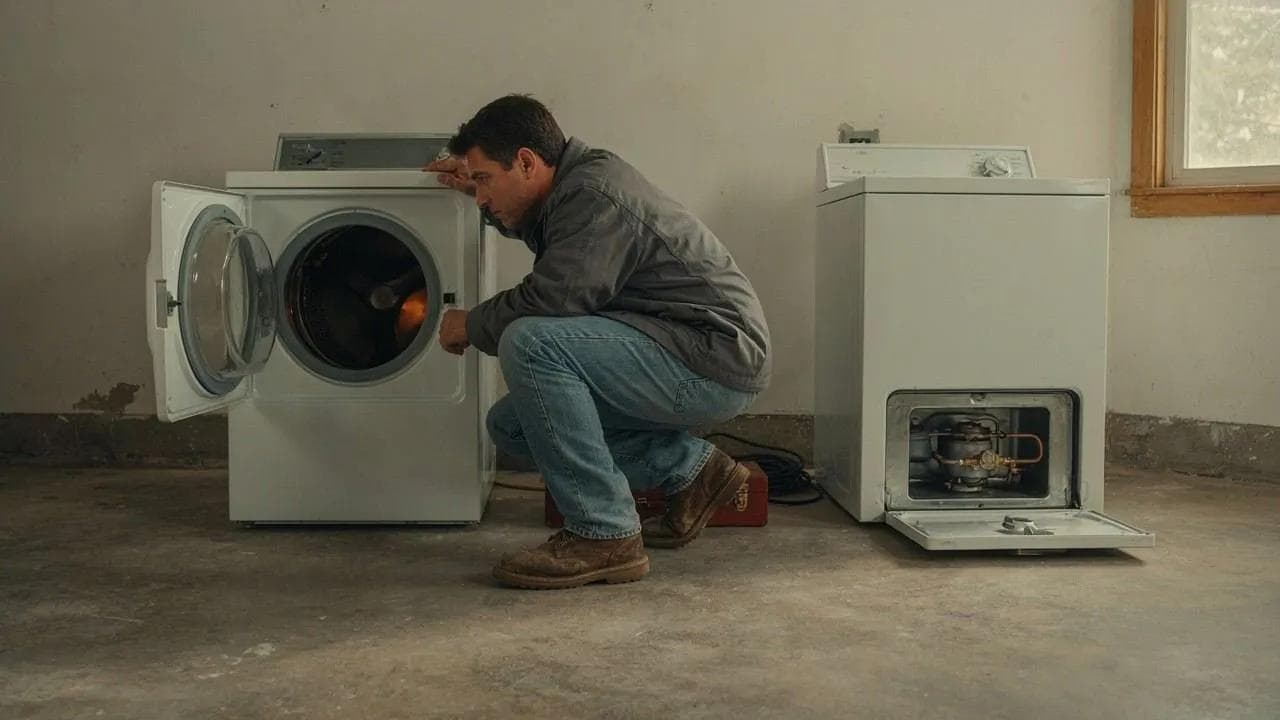
Gas dryers use a burner assembly with an igniter, a gas valve, and a flame sensor working together to safely ignite and regulate a small gas flame that heats the air.
Why the Difference Sits in One Component, Not the Whole Machine
This is the most important thing to understand about the comparison. You’re not choosing between two fundamentally different machines, you’re choosing between two different heating systems bolted onto otherwise identical appliances.
Most Common Electric Dryer Repairs
Electric dryers tend to have a shorter, more predictable list of heating-related issues.
A Burned-Out Heating Element
This is the most common electric dryer repair. Over time, the coil inside the heating element can break, leaving the dryer tumbling normally but producing no heat at all.
A Blown Thermal Fuse
The thermal fuse is a safety device that cuts power if the dryer overheats. Once it blows, it needs to be replaced before the dryer will heat again, and it often blows as a symptom of an airflow problem, something explored further in this guide on why your dryer might be getting too hot.
A Failing Thermostat
The thermostat regulates temperature by cycling the heating element on and off. When it fails, the dryer can run too hot, too cool, or stop heating altogether.
Most Common Gas Dryer Repairs
Gas dryers have a slightly longer list of heat-related components, since the ignition system involves several parts working in sequence.
A Cracked or Failing Igniter
The igniter heats up to ignite the gas and is one of the most common gas dryer failure points. Once it cracks or weakens, the dryer often runs and tumbles normally but never produces heat.
A Faulty Gas Valve Solenoid
The gas valve solenoid controls the flow of gas to the burner. If it fails, gas either won’t flow at all, or won’t shut off properly, which is a safety-critical failure that always needs professional attention.
A Failing Flame Sensor
The flame sensor confirms the burner has actually ignited. If it fails, the dryer may shut off the gas supply as a safety precaution even when everything else is working correctly.
A Blown Thermal Fuse
Just like electric dryers, gas models also rely on a thermal fuse as a safety backup, and it can blow for the same underlying reasons, most often restricted airflow.
Repair Cost Comparison: Gas vs. Electric
Once you know what typically breaks, cost becomes the next natural question, and this is where the two types start to look noticeably different.
Why Electric Dryer Repairs Tend to Cost Less
Electric dryers are more common overall, which means parts are widely available and most technicians are highly familiar with the repair process, keeping labor time and cost more predictable.
Why Gas Dryer Repairs Often Cost More
Gas dryers involve more specialized components, and diagnosing or replacing anything related to the gas system requires additional certification and safety procedures, which adds to the overall repair cost.
Typical Cost Ranges for Common Repairs on Each Type
Simple repairs, like a thermal fuse replacement, tend to sit at the lower end of the cost range for either type. Heating element or igniter replacements cost more, with gas-related repairs generally landing at the higher end due to the added complexity of the ignition system. A technician can give you an accurate number once they’ve diagnosed the specific issue.
DIY Repair Feasibility: Which One Can You Safely Fix Yourself?
This is where the choice between gas and electric matters most for homeowners who like to handle repairs themselves.
What’s Reasonable to DIY on an Electric Dryer
Many electric dryer repairs, like replacing a heating element or a thermal fuse, are within reach for a comfortable DIYer, as long as the power is properly disconnected first.
Why Gas Dryer Repairs Call for a Professional
Any repair involving the gas valve, igniter, or burner assembly should be handled by a licensed technician. These components involve a live gas connection, and a mistake here carries real safety consequences that go beyond a simple appliance malfunction.
The Real Risk Behind Gas Line and Ignition Repairs
A gas leak isn’t something you can always detect immediately on your own, which is exactly why professional diagnosis matters here more than with most other appliance repairs. Attempting this kind of repair without the right training is a clear example of where a DIY attempt can end up costing far more than it saves, a pattern explored in this breakdown of the hidden costs of DIY appliance repair.
Reliability and Lifespan: Is One Actually More Dependable?
This is the question most homeowners actually want answered, and the honest answer depends less on fuel type than you’d expect.
What the Repair Data Actually Shows
Repair frequency between gas and electric dryers is fairly close overall, since the two types share the majority of their components. The heating system is where most of the difference in repair experience actually shows up, not overall reliability.
Why Brand and Build Quality Matter More Than Fuel Type
Across the appliance industry, brand reliability and build quality tend to have a bigger impact on how often a dryer needs service than whether it runs on gas or electricity.
How Igniter Wear Compares to Heating Element Wear Over Time
Igniters have a finite lifespan and can become brittle over years of repeated heating and cooling cycles. Electric heating elements also wear down over time, though the failure often shows up as a single clean break rather than gradual degradation.
Installation and Setup Differences That Affect Repairs Later
How a dryer gets installed in the first place can influence how often it needs repairs down the road.
Electrical Requirements for Electric Dryers
Electric dryers need a dedicated 240-volt outlet. If your laundry room already has one, installation is usually straightforward and doesn’t require any additional utility work.
Gas Line and Ventilation Requirements for Gas Dryers
Gas dryers need both a gas line connection and proper venting, and these should always be installed or inspected by a qualified professional to ensure everything is sealed and functioning correctly.
Why Improper Installation Leads to More Repairs Down the Road
A poorly sealed gas connection or an incorrectly wired electrical outlet can cause ongoing issues that look like appliance problems but actually trace back to the installation itself.
Safety Considerations Specific to Each Type
Both dryer types are safe when properly installed and maintained, but each comes with its own specific risks worth understanding.
Gas Leak Risks and Warning Signs
A faint sulfur or rotten egg smell near the dryer is a sign of a possible gas leak and should be treated as an emergency. Turn off the gas supply if you can do so safely and leave the area immediately.
Electrical Risks and Warning Signs
Any burning smell, sparking, or a dryer that shocks you when touched needs immediate attention. This kind of warning sign should never be ignored, a topic covered thoroughly in this guide on why you shouldn’t ignore a shocking appliance.
Why Vent Maintenance Matters Equally for Both
Regardless of fuel type, a blocked dryer vent creates the same fire risk on both gas and electric models, since the danger comes from trapped lint and heat, not from how the dryer generates that heat in the first place. This is worth taking seriously on either type, a topic covered in full in this guide on dryer vent fire hazards and why vent cleaning matters.
Which One Makes Sense for Your Murrieta Home
With the repair picture in mind, here’s how to think through the decision for your specific situation.
What to Check Before Choosing Based on Your Current Hookup
If your laundry room already has a gas line and proper venting in place, switching to electric would mean added installation cost. The reverse is true if you currently have a 240-volt outlet but no gas line.
Questions to Ask If Minimizing Repair Costs Is Your Priority
Ask whether your local service area has technicians certified for gas appliance repair, since availability can affect both repair speed and cost. It’s also worth asking about the specific brand’s repair history rather than focusing on fuel type alone, since build quality tends to matter more in the long run.
When to Call a Professional Appliance Repair Technician
Some situations call for a professional regardless of which type of dryer you own.
Repair Cost Is Approaching Replacement Value
If your dryer is already older and the estimated repair cost is getting close to what a new unit would cost, it’s worth having an honest conversation about repair versus replacement before committing to the fix. This guide on whether it’s worth repairing your old appliance or replacing it can help you think through that decision.
Repeated Heating Failures on Either Type
If your dryer keeps losing heat after a repair, or the same issue keeps returning, that often points to an underlying cause that wasn’t fully addressed the first time.
You’re Not Confident Diagnosing the Cause Yourself
Between shared mechanical parts and a distinct heating system, pinpointing the exact cause of a dryer issue isn’t always straightforward. If you’re not sure whether you’re dealing with a mechanical problem or a heating system issue, reach out to our team and we can help you figure it out.
Gas and electric dryers aren’t as different as they might seem, since most of the machine works exactly the same way regardless of fuel type. The real difference comes down to how each one generates heat, and that single distinction shapes repair cost, DIY feasibility, and safety considerations more than anything else.
The team at Appliance Repair Murrieta works on both gas and electric dryers across the area, so whichever type you own, you don’t have to guess at what’s actually wrong or whether it’s safe to fix yourself.