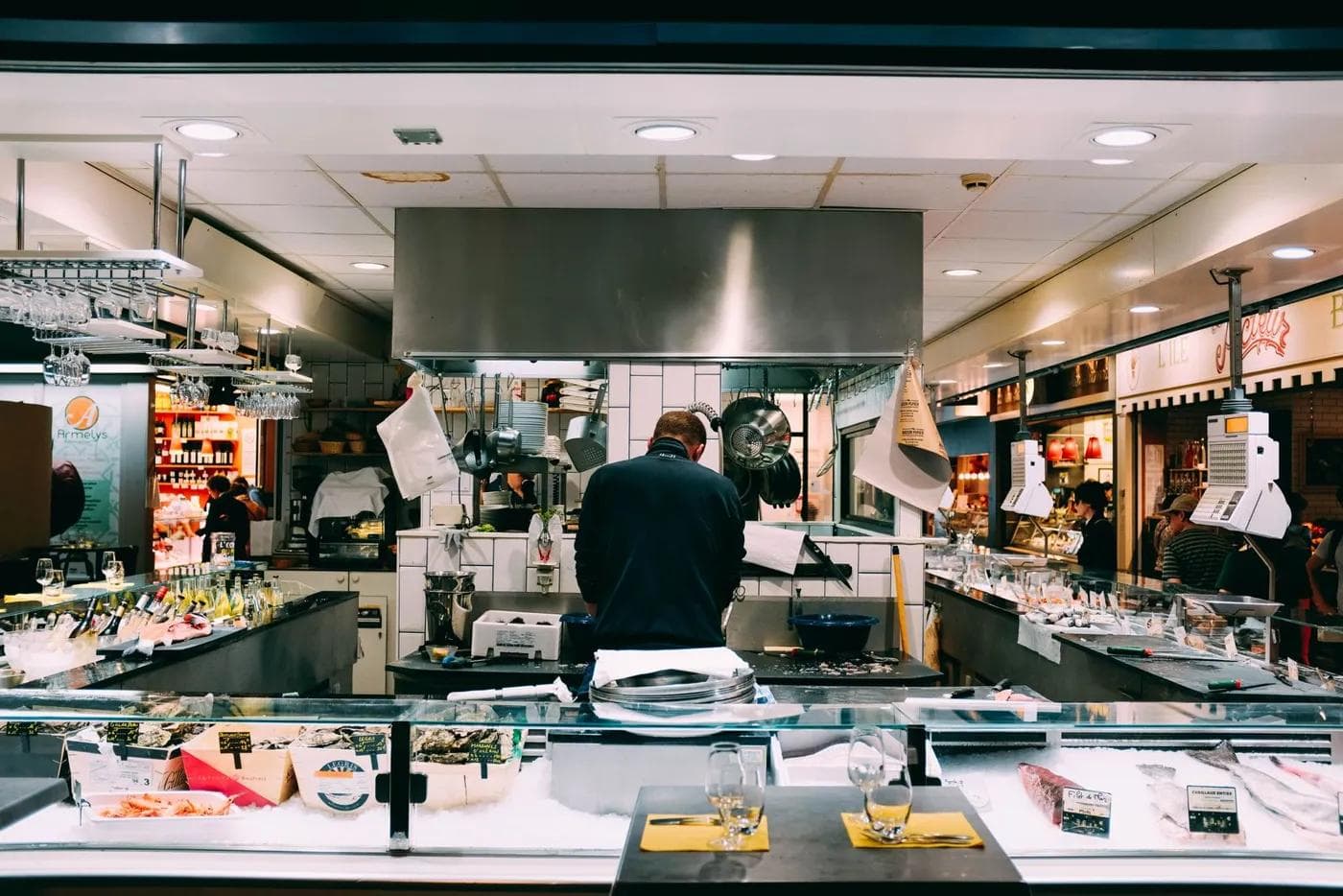
A residential refrigerator that fails is an inconvenience. A walk-in cooler that fails on a Friday afternoon on Jefferson Avenue is a stock loss, a compliance problem, and a lost service, all at once. Restaurants, cafes, and bars along the Jefferson Ave corridor run their refrigeration, ice machines, and dishwashers harder than any home kitchen does, often with little margin for downtime.
This guide covers commercial appliance maintenance in Murrieta from the technician's side: why downtime costs more in a commercial kitchen, what health code compliance means for your equipment, how a preventive maintenance contract is structured, what our 4-hour response commitment covers, and what documentation you need when a failure turns into an insurance claim.
Why commercial appliance downtime costs more than residential
When a home refrigerator stops cooling, the household loses some groceries and eats out for a night. When a restaurant reach-in or walk-in stops holding temperature, the cost stacks up in several directions at once. Perishable inventory may have to be discarded. Menu items come off the board. Staff are still on the clock while the kitchen works around the problem. If the failure happens during service, the cost lands at the worst possible moment.
Commercial equipment also fails differently. A home refrigerator door opens a few dozen times a day. A prep table on a busy line is opened constantly through lunch and dinner, the compressor rarely gets a long rest, and the condenser pulls in grease-laden kitchen air. Murrieta's summer heat adds to the load: condenser fan failures and compressors short-cycling are among the most common walk-in problems we see, and both get worse when coils are dirty and ambient temperatures climb.
Ice machines carry their own risk. A commercial ice machine that stops producing on a Saturday afternoon takes bar and beverage service down with it, and Murrieta's hard water, at roughly 140 to 180 ppm from RCWD and Western MWD, accelerates water inlet valve and sensor failures. Commercial dishwashers matter just as much: if a high-temperature machine cannot reach its required final rinse temperature, dishes are not being sanitised properly, and that becomes a compliance problem rather than a cleaning problem.
The practical point is that commercial downtime is measured in lost revenue per hour, not in inconvenience. That changes the maths on maintenance. Spending money on scheduled inspections and condenser cleaning makes sense in a restaurant in a way it rarely does for a single household appliance, because a failure prevented is a service saved.
Health code compliance considerations
Your equipment is part of your food safety system, and inspectors treat it that way. The core requirement for refrigeration is straightforward: the California Retail Food Code requires potentially hazardous food to be held at or below 41°F (or at or above 135°F for hot holding), with limited exceptions. The same code requires a thermometer in each refrigeration unit, positioned to read the warmest part of the unit. A cooler that drifts a few degrees warm during a busy service is not just a maintenance issue, it is the kind of thing an inspector will notice.
We are an appliance repair service, not a food safety consultancy, so we do not interpret the code for your specific operation. Riverside County environmental health is the authority on how the rules apply to your kitchen. What we can do is keep the equipment capable of meeting the requirements, and catch the failure modes that cause temperature drift before they cause a violation.
In practice, the equipment issues that create compliance problems tend to be:
- Refrigeration drifting warm. Dirty condenser coils, failing condenser or evaporator fans, worn door gaskets, defrost system faults that ice up the evaporator, and low refrigerant charge all push temperatures up gradually. Gradual is the dangerous part, because nobody notices until a thermometer check or an inspection does.
- Dishwasher sanitising failures. High-temperature machines depend on a booster heater to hit their sanitising rinse temperature, typically 180°F for high-temp units. Low-temperature machines depend on a chemical sanitiser dispenser working correctly. Either failure means the machine cannot legally be used for sanitising until it is fixed.
- Ice machine hygiene. Ice is food. Scale and biofilm in a neglected machine, or a leaking machine creating standing water, are equipment problems with food safety consequences.
When a repair is complete, our itemised invoice records the equipment, the fault, and the parts installed, which gives you a paper trail to show an inspector that a problem was identified and corrected.
Preventive maintenance contract structure
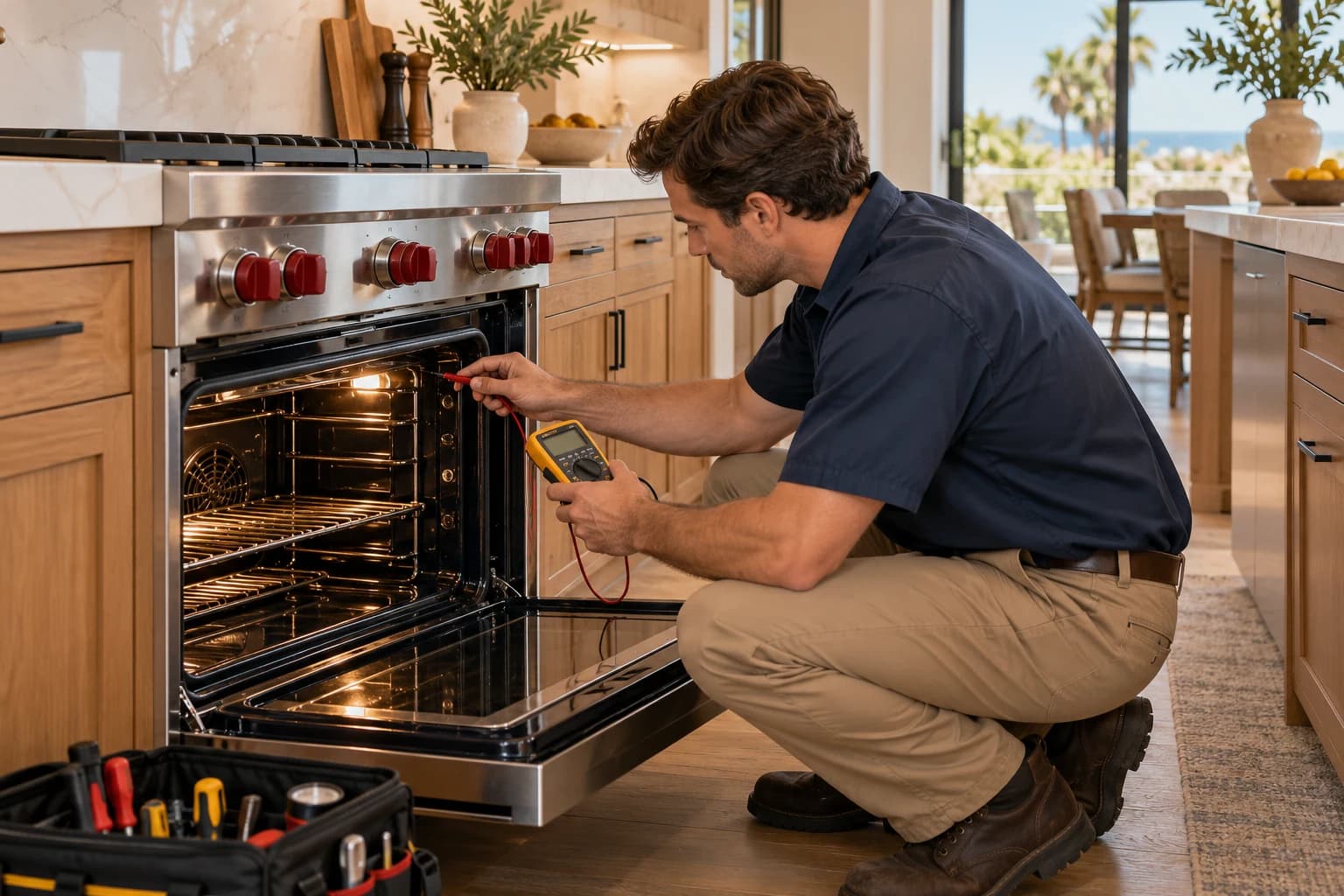
Most commercial failures we attend could have been flagged earlier. Condenser coils clogged with grease and dust, a door gasket torn at one corner, a fan motor running noisy, an ice machine valve beginning to scale: these are visible on an inspection weeks or months before they stop the equipment. A preventive maintenance contract exists to find them on a schedule rather than during service.
Our standard contract is built around quarterly inspections of your refrigeration, ice machines, and dishwashing equipment. Each visit covers:
- Cleaning condenser coils on refrigeration equipment.
- Verifying refrigerant charge, with any sealed system work carried out by Ryan Weber, our EPA 608 certified technician, using proper refrigerant recovery and recharge.
- Inspecting door gaskets, fans, and defrost operation on coolers and freezers.
- Checking ice machine operation and the condition of water-side components.
- Checking dishwasher operation, including rinse temperature or sanitiser dispensing.
- Identifying components approaching end of life, so you can plan a replacement part on your schedule instead of the equipment's.
Pricing is structured per piece of equipment and quoted individually, because a cafe with two reach-ins and an under-counter dishwasher has very different needs from a full-service restaurant with a walk-in, multiple prep tables, and two ice machines. We will not quote you a generic package price; we walk the kitchen, list the equipment, and price what you actually have.
Contract customers also receive priority scheduling and reduced diagnostic fees on any additional service calls during the contract period. For ice machines specifically, we will usually recommend dedicated water treatment, either an RO system for the machine or a commercial-grade cartridge filtration system. Feeding untreated municipal water straight into a commercial ice machine in Murrieta tends to mean recurring valve and sensor service, and treatment significantly extends component life.
Light commercial cooking equipment such as convection ovens, holding cabinets, and warming drawers is serviced on a case-by-case basis. Full commercial gas ranges, combi ovens, and fryers may need a dedicated commercial cooking equipment provider, and we will tell you so rather than stretch beyond our scope.
4-hour response commitment and what it covers
Our commercial appliance repair service runs on a different response schedule from residential work. Commercial calls received before 2 pm receive a 4-hour maximum response commitment during business hours. Calls received after 2 pm receive next-morning priority scheduling by 9 am. Genuine emergencies, meaning loss of refrigeration threatening perishable inventory or a health code compliance issue, receive same-day dispatch regardless of when the call comes in.
For the Jefferson Avenue corridor, arrival is typically within 90 minutes of dispatch during business hours. Our hours are Monday to Saturday, 8 am to 5 pm, with limited Sunday service for commercial customers. We do not run a 24-hour service, so if your equipment shows signs of trouble late in the day, call before 2 pm where you can.
The commitment covers the equipment within our commercial scope: walk-in coolers and freezers, reach-in coolers and freezers, refrigerated prep tables, merchandiser coolers, commercial ice machines from Scotsman, Manitowoc, Hoshizaki, Ice-O-Matic, and U-Line, and commercial dishwashers from Hobart, CMA, Champion, Jackson, and Meiko. Our refrigerator repair and ice maker repair pages cover the residential side of the same component families.
Response is the first step, not the repair. On arrival you get an on-site diagnostic and a flat-rate quote before any work begins. The commercial diagnostic is $145, and that fee is applied to the repair. Labour is $145 per hour minimum, with parts at standard trade markup. Most repairs are completed on the same visit when parts are stocked; when a part has to be ordered, the return visit is typically scheduled within 24 to 72 hours.
When you call, identify it as a commercial call at the outset so it is routed as one, and have the business name, address, equipment type, and a description of the failure ready.
Insurance documentation for commercial failures
If a walk-in fails overnight and you lose stock, the repair is only half of what you need to deal with. A loss-of-refrigeration claim depends on documentation, and the time to collect it is while the failure is happening, not a week later.
Insurers typically want to know when the failure occurred, what temperature the unit reached during the failure period, and when the repair was completed. We can provide that documentation when you call promptly at the time of failure, because the evidence we record on site, such as unit temperature on arrival and the failed component, is what supports the timeline. If the unit has already been running normally for several days by the time anyone looks at it, there is much less we can document.
Every commercial repair invoice is itemised and includes:
- Equipment model and serial numbers.
- The fault found and the parts installed.
- Technician identification.
- The repair timeline.
The same documentation serves health department inspections and warranty records. What we cannot do is tell you whether a claim will be paid; that depends on your policy and your insurer. On your side, it helps to keep temperature logs, photograph the unit display and any discarded stock, and note the time you discovered the problem.
If you run a restaurant, cafe, or bar on Jefferson Avenue and want to set up quarterly maintenance or need a technician for a failure now, call (951) 592-3670 and say it is a commercial call, or send the details through the contact page. We will quote preventive maintenance after walking through your equipment.