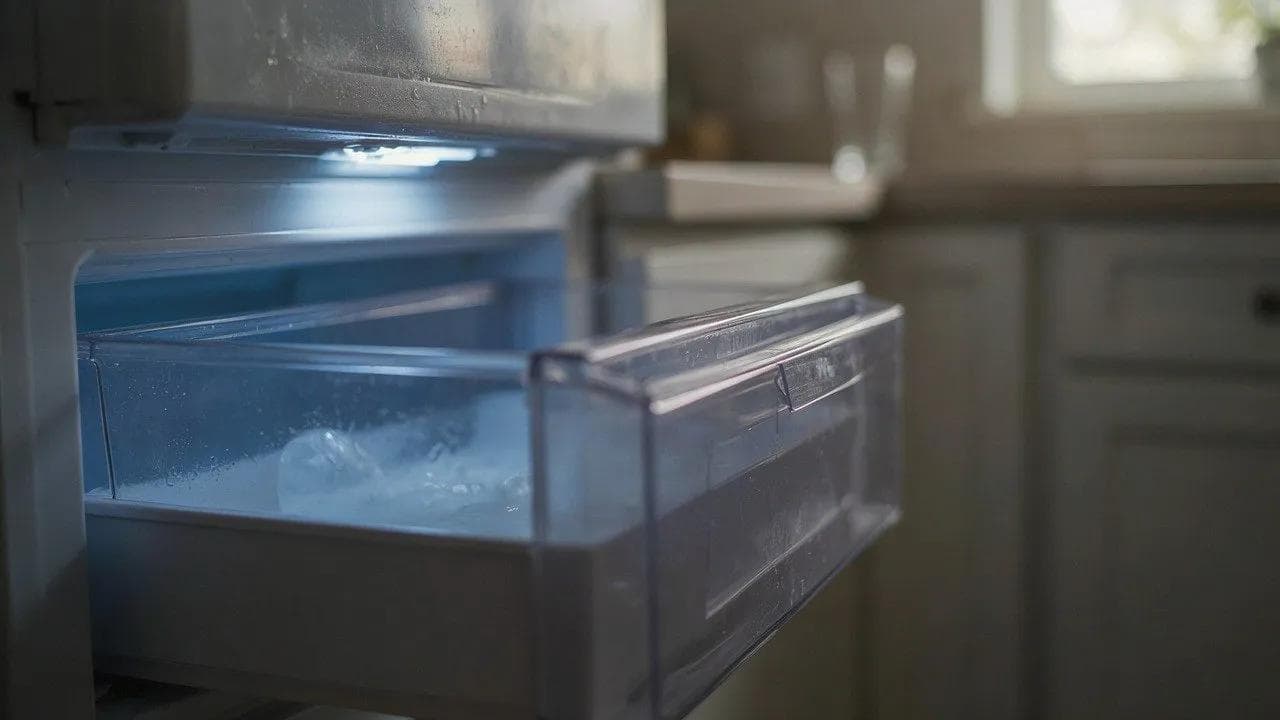
You reach for a glass of ice on a hot Murrieta afternoon and find the bin empty. No cubes, no warning, and no obvious reason why. An ice maker that quits can feel like a big problem, but most failures come down to a handful of simple causes, like a frozen tube, a clogged filter, or a freezer running too warm.
This guide walks you through how an ice maker works, how to find the real cause, what you can fix yourself, and when to call a professional.
How an Ice Maker Actually Makes Ice
A problem at any step in the process shows up the same way: no ice. Knowing the sequence helps you figure out where things went wrong.
The Fill Cycle: From Water Line to Ice Mold
When the ice maker calls for water, a valve opens briefly and sends water through a small fill tube into the ice mold. Everything else depends on that water arriving on time and in the right amount.
The Freeze and Harvest Cycle
Cold freezer air turns the water into cubes. A thermostat on the mold senses when they’re frozen, then the unit briefly warms the mold and sweeps the cubes into the bin. A shutoff arm tells it when the bin is full.
Start Here: Quick Checks Before You Troubleshoot Anything
Before you look at any parts, rule out the simple stuff. These checks take just a few minutes and solve more cases than you might expect.
Confirm the Ice Maker Is Actually Switched On
Look for the on/off switch or the control setting on the ice maker or display. It’s easy to bump off during cleaning, and a power interruption can leave it stuck in the off position. If you’ve recently lost power, this guide on resetting your home appliances after a power outage in Murrieta walks you through restarting them safely.
Check That the Shutoff Arm or Bin Is in the Right Position
Many ice makers use a wire arm that stops production when it’s raised. If the arm is up, or the bin isn’t seated fully, the ice maker assumes the bin is full and stops making ice.
Confirm the Water Supply Valve Is Fully Open
Find the shutoff valve under the sink or behind the refrigerator and make sure it’s open all the way. A valve that got nudged during a move or a cleaning can cut off the water supply completely.
Top Reasons Your Ice Maker Stopped Working
If the quick checks don’t solve it, one of these causes is usually behind the problem.
A Freezer Temperature That’s Too Warm
Ice makers need a cold freezer, typically around 0°F. If the temperature climbs too high, many models stop harvesting ice altogether to protect the machine.
A Frozen Fill Tube
This is one of the most commonly cited causes. A small amount of leftover water freezes into a plug inside the tube, blocking the next fill. The ice maker may still cycle, but no cubes form.
A Clogged Water Filter
A filter packed with sediment or mineral buildup restricts water flow. The ice maker then gets only a trickle, which can produce little or no ice.
Low Water Pressure or a Kinked Supply Line
Most ice makers need around 20 PSI of water pressure at minimum, though your manual has the exact requirement. A supply line that got crushed or kinked behind the refrigerator can cut flow just as effectively.
A Faulty Water Inlet Valve
This valve opens to send water to the mold. If it fails, no water arrives. If it doesn’t close fully, it can seep water and cause leaks, a problem covered in this guide on water leaking inside the fridge.
A Failed Ice Mold Thermostat
The mold thermostat signals when the cubes are frozen and ready to release. If it fails, the harvest cycle never starts, and the mold just sits full of ice.
A Jammed or Failed Ice Maker Assembly
Clumped cubes can jam the mechanism, and the motor or ejector inside the assembly can also wear out. This is usually the last cause to suspect, after you’ve ruled out the others.
What Your Ice Maker’s Symptoms Are Telling You
The specific way your ice maker fails gives you strong clues about the cause before you touch anything.
Water Is Reaching the Mold but Never Freezing
If you see water in the mold that never turns to ice, the problem is almost always freezer temperature rather than water flow.
The Ice Maker Is Silent and Shows No Activity at All
No fill sounds and no cycling usually point to a power, switch, or control problem rather than a water issue.
Ice Forms but Never Releases Into the Bin
Cubes that freeze but stay stuck in the mold often point to a failed mold thermostat or a harvest mechanism that isn’t working.
Cubes Are Small, Hollow, or Inconsistent
Undersized or hollow cubes usually mean the mold isn’t getting enough water, which points toward low pressure or a partly clogged filter.
How to Diagnose What’s Actually Wrong
A few simple tests help you narrow down the cause without taking anything apart.
Test 1: Check the Real Freezer Temperature
Place a freezer thermometer inside for several hours and read it, rather than trusting the dial setting. The actual temperature is what matters.
Test 2: Inspect the Fill Tube for Ice
Look at the fill tube near the back of the ice maker. Visible ice around or inside the tube is a clear sign of a freeze-up.
Test 3: Measure Water Flow Into the Ice Maker
Run the water dispenser and watch the stream. A weak or sputtering flow points to a pressure or filter problem upstream of the ice maker.
Test 4: Listen for the Inlet Valve Click
When the ice maker calls for water, you may hear a faint click or hum from behind the refrigerator. Silence at that moment can point to a valve or control issue. Knowing what normal sounds like also helps you catch abnormal ones, which this rundown of sounds your appliances should never make covers well.
DIY Fixes You Can Safely Try
Several common causes are simple enough to fix yourself, often in under an hour.
Thaw a Frozen Fill Tube Safely
Unplug the refrigerator first. Then use a hair dryer on low heat, or a turkey baster filled with warm water, to melt the ice plug slowly. Avoid sharp tools or high heat, which can damage the tube.
Replace a Clogged Water Filter
Swap in the correct replacement filter for your model, then run a few cycles of water through it as the instructions direct. This restores full flow for many ice makers.
Adjust the Freezer to the Right Temperature
Set the freezer to the temperature your manual recommends and give it a full day to stabilize. Avoid setting it far colder than needed, since an overly cold freezer can also freeze the fill tube.
Clear Jammed Ice From the Mold and Bin
Remove the bin, take out any clumped cubes, and let stuck ice melt on its own. Don’t pry at it with sharp tools, which can damage the mold.
Reset the Ice Maker
Many models have a reset switch or a test button. Check your manual, then switch the ice maker off for a minute and back on to restart the cycle.
When the Problem Points to a Failed Component
If the DIY fixes don’t hold, these signs suggest a part has actually failed.
The Fill Tube Keeps Refreezing After You Thaw It
A tube that refreezes within days usually means the inlet valve is seeping a small amount of water between cycles. Thawing it again only buys you time, and the valve itself needs attention.
Water Flows to the Dispenser but Never to the Ice Maker
The dispenser and the ice maker typically draw from separate ports on the same valve. One port can fail while the other keeps working normally, which points to a valve problem.
Visible Damage or a Burnt Smell at the Ice Maker Assembly
Stop using the ice maker and unplug the refrigerator. A burnt smell or visible damage points to an electrical problem, the kind of warning sign explained in this guide on why you shouldn’t ignore a shocking appliance.
The Freezer Can’t Hold Temperature Even After Adjusting It
If the freezer stays warm no matter how you set it, the ice maker is a symptom rather than the cause. This often points to a bigger cooling issue, similar to what’s covered in this guide on why your refrigerator is running constantly.
Why Murrieta’s Hard Water Is Especially Tough on Ice Makers
Local water conditions add a wrinkle that homeowners in softer-water areas don’t deal with as much.
How Local Mineral Content Clogs Filters Faster Than Average
Murrieta’s water supply carries a high mineral content, which clogs filters faster than the packaging usually suggests. This pattern shows up across your home, and this guide on how hard water in Murrieta affects your home appliances explains it in more detail.
How Scale Builds Up Inside the Inlet Valve and Fill Tube
Mineral scale narrows the small openings in the inlet valve and fill tube over time. That can keep the valve from opening fully or sealing properly, which sets the stage for slow fills and repeated freeze-ups.
Repair Costs for Common Ice Maker Problems
Once you know the likely cause, cost becomes the next natural question. Prices vary by brand and model, but the general pattern holds.
Cost to Replace a Water Filter
This is typically the most affordable fix, since it involves only the part itself and no labor if you do it yourself.
Cost to Replace a Water Inlet Valve
This repair costs more, since it involves both the part and the labor to reach and replace it behind the refrigerator.
Cost to Replace the Ice Maker Assembly
The assembly is usually the priciest ice maker repair, since the part itself costs more and installation takes more time.
When Repair Costs Signal It’s Time to Replace the Refrigerator
If your refrigerator is already older and the repair estimate is climbing, it’s worth weighing the cost against the unit’s remaining life. This guide on whether it’s worth repairing your old appliance or replacing it can help you make that call.
How to Prevent Your Ice Maker From Stopping Again
A few small habits keep this from becoming a repeat problem.
Replace the Water Filter on Schedule
Plan on replacing the filter about every six months, and a bit sooner in hard water areas like ours. A fresh filter protects both water flow and the inlet valve.
Watch for Early Slowdowns in Ice Production
If your bin takes longer to fill than it used to, don’t wait for a complete stop. Early slowdowns are a classic warning sign, and this list of signs your appliances are about to break down covers what else to watch for around your home.
Keep Stored Items From Bumping the Shutoff Arm
Frozen bags and boxes stacked near the ice bin can push the shutoff arm up and stop production without you noticing. Leave a little clearance around the ice maker.
Check the Water Line During Annual Maintenance
Once a year, pull the refrigerator out and look at the supply line for kinks, drips, or damage. Small checks like this also help extend how long your appliances last, as this guide on the average lifespan of major home appliances explains.
When to Call a Professional Appliance Repair Technician
Some ice maker problems go beyond what’s practical or safe to handle yourself.
You’ve Worked Through the DIY Checks Without Results
If you’ve confirmed the temperature, thawed the tube, replaced the filter, and reset the unit, but there’s still no ice, the cause is likely a failed component that needs professional diagnosis.
The Repair Involves Electrical Testing and Water Connections
Testing valves and replacing assemblies means working with electrical parts and water connections at the same time. A small mistake can cause a leak or a short, a pattern explained in this breakdown of the hidden costs of DIY appliance repair.
Your Refrigerator Is Still Under Warranty
If your refrigerator is still covered, a DIY repair could affect that coverage, so it’s worth checking your terms first. If you’re not sure where you stand, reach out to our team and we’ll help you figure out the right next step.
An ice maker that stops working is frustrating, but it’s rarely a mystery once you know where to look. Start with the quick checks, then work through the freezer temperature, the fill tube, and the filter, since those solve most cases on their own.
If the problem sticks around, that’s a clear sign a part has failed, and catching it early keeps a small repair from growing. The team at Appliance Repair Murrieta has helped homeowners across the area track down everything from a frozen fill tube to a failing inlet valve, so you don’t have to keep guessing why that bin is empty.