A Wolf burner that clicks and clicks without lighting is one of the most common calls we get from Greer Ranch and Copper Canyon kitchens. When a Wolf range igniter is not working, the cause is often something a homeowner can check in ten minutes: a damp electrode, a burner cap sitting slightly off center, or air in a line that has not been used for a while. Sometimes it is a genuine component failure that needs a technician and the correct part.
This guide walks through how Wolf sealed burner ignition works, the checks worth doing yourself, what a failed igniter or spark module looks like when we test it, and what professional replacement costs and takes. One rule comes before everything else: if you smell gas at any point, stop. Do not operate switches or try to light a burner. Leave the house and call the gas utility (SoCalGas: 800-427-2200) from outside.
Understanding Wolf sealed burner ignition
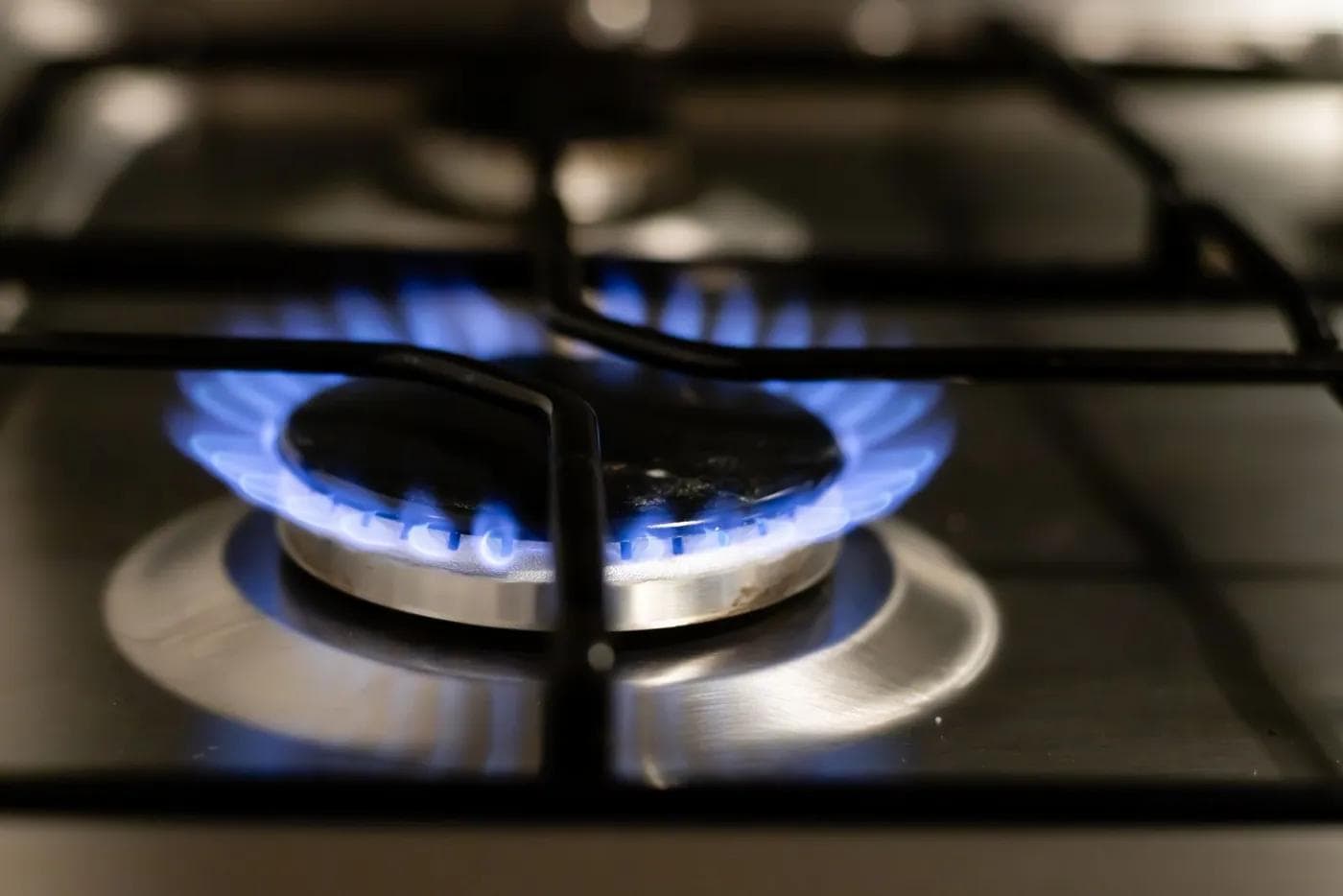
Wolf gas ranges and rangetops use sealed burners, meaning the burner base is sealed to the cooktop surface so spills cannot drop into the range body. Most current Wolf burners are dual-stacked: an upper ring of ports handles high heat, and a lower ring handles low simmer. The burner cap and ring sit on top of the burner head and have to be seated correctly for gas to flow through the ports in the right pattern.
Ignition is electronic. Next to each burner is a small ceramic igniter with a metal electrode tip. When you turn a knob, a switch on that burner's control closes and signals the spark module, which sends high-voltage pulses to the igniter. Each pulse is the click you hear. The spark jumps from the electrode to the burner, lights the gas, and the system watches for a stable flame. If the flame goes out, the system sparks again to relight it. That automatic reignition is why a Wolf burner sometimes clicks briefly in a draft or under a very large pan.
Depending on the model, one spark module may serve a single burner or several. That matters for diagnosis: a single dead burner can be its igniter, its switch, or its output from the module, while several burners failing together points toward the module or its power supply.
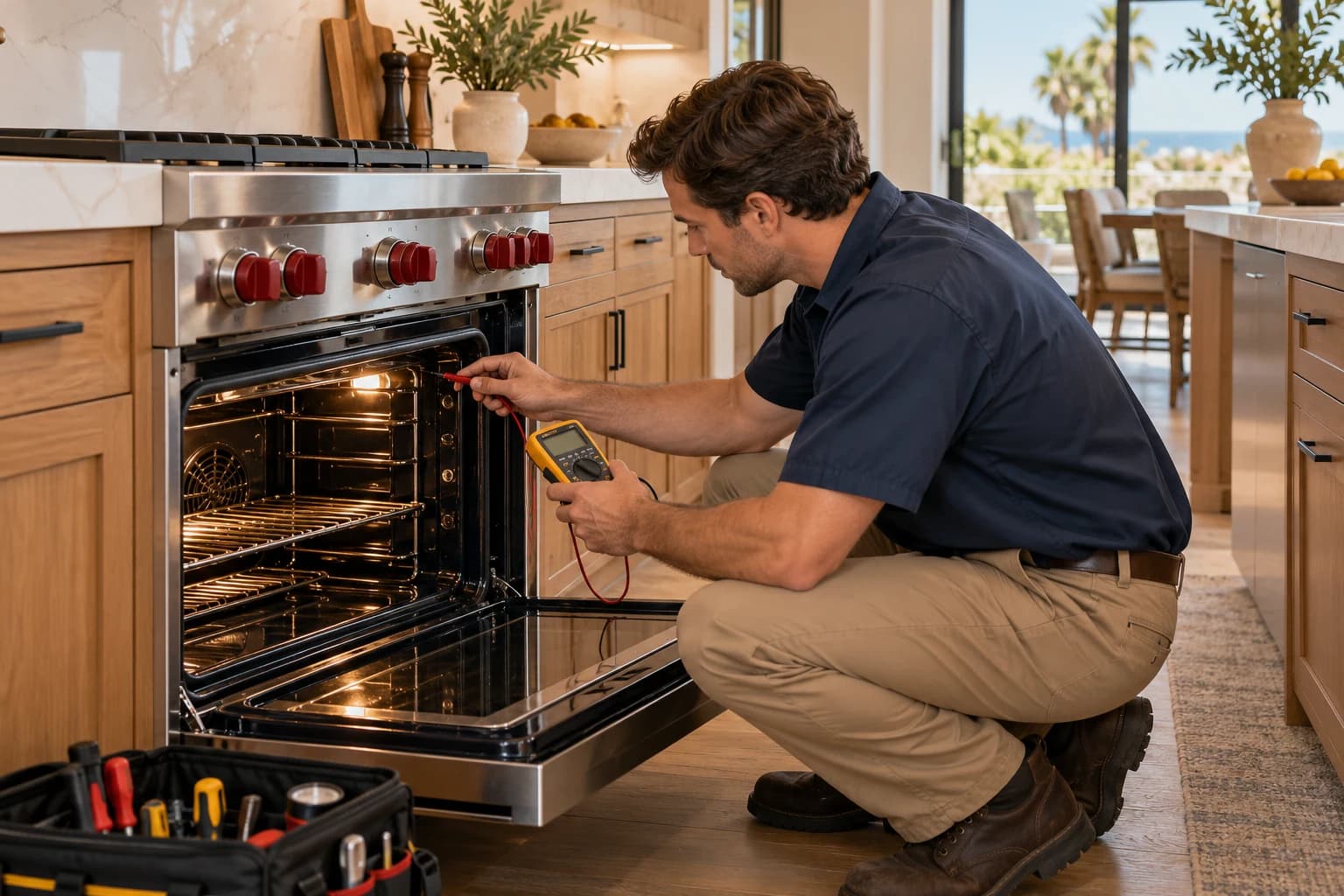
The same logic applies to the oven on a gas or dual-fuel range, although oven ignition uses different components. If your problem is in the oven cavity rather than on the cooktop, our oven and range repair page covers those failures.
Three DIY checks before calling a technician
Before any check, turn every burner knob to off, let the cooktop cool fully, and switch off the range at its circuit breaker. Never take apart the burner base, the valves, or the regulator. These three checks only involve parts that lift off by hand.
Clean the burner cap and igniter tip
Grease and food residue on the electrode, or moisture from a boil-over or a recent wipe-down, will stop the spark from reaching the gas. Lift off the grate, burner cap, and ring. Wipe the cap and ring with warm soapy water, clear any blocked ports with a toothpick, and dry them completely. Brush the igniter tip gently with a soft, dry toothbrush; do not use water on the igniter itself. If anything got wet, let it dry thoroughly before trying again. Wolf's own troubleshooting guidance for burners that click or will not ignite suggests a hairdryer to speed this up. Then reseat the ring and cap so they sit flat and centered. A cap that rocks or sits off center is a very common cause of clicking without lighting.
Verify gas supply
Restore power and try a burner. If you hear clicking and see a spark but smell no gas at the burner and get no flame, the gas may not be reaching it. Check that the shutoff valve behind the range is in the open position (handle parallel to the pipe) and that other gas appliances in the house are working. If the burner has not been used for weeks, air in the line can delay ignition: turn it off after 10 seconds if it has not lit, wait a minute, and try again. Do not hold a burner on and clicking for long periods. If there is any gas smell, follow the safety steps above instead.
Check if other burners work
Try each burner in turn. If only one burner fails while the rest light normally, the fault is isolated to that burner's igniter, its switch, or its connection to the module. If every burner fails to spark, and the breaker is on, the problem is upstream: power to the range, the spark module, or its wiring. That one observation tells our technician a great deal before he arrives, so note it when you call.
What a failed igniter module looks like diagnostically
Once the simple causes are ruled out, the fault sits in one of three places: the igniter electrode, the switch on the burner control, or the spark module. Each has a recognizable pattern.
A failing igniter typically produces a weak or wandering spark, or no visible spark at one burner while you can still hear clicking. Cracked ceramic insulation lets the spark short to the burner base instead of jumping across the gap.
A failing burner switch often causes clicking that continues after the knob is turned off, or clicking at every burner whenever one particular knob is moved. Moisture that has worked into a switch can produce the same symptom, which is why we always confirm the range is fully dry before condemning a part.
A failing spark module shows up as no spark across all the burners it serves, an intermittent spark that comes and goes as the range warms up, or continuous clicking after the burner is lit because the system no longer recognizes the flame. On a range eight or more years old, gradual module failure is common.
Our technician confirms which part is at fault by checking spark at each electrode, testing the switches, inspecting the wiring and ground connections, and verifying power to the module. That testing is the difference between replacing one $220 part and replacing three parts on a guess.
Why aftermarket igniter modules fail on Wolf ranges
Aftermarket igniters and spark modules are sold for many Wolf models at a fraction of the genuine part price, and we understand the temptation. In our experience they are a poor investment on this equipment.
Wolf sealed burner components are precision-made, and the ignition system depends on several things matching exactly: the length and position of the electrode relative to the burner, the quality of the ceramic insulator, the connector type, and the spark module's output and flame-sensing behavior. A part that is close but not exact can light the burner on day one and still cause trouble: a spark gap slightly off, reignition that does not recognize the flame and keeps clicking, or ceramic that cracks after a few months of heat cycling.
For that reason we do not install aftermarket substitutes on Wolf equipment. We use genuine Sub-Zero Wolf parts sourced through the manufacturer's distributor network, which is also what our 90-day parts and labour warranty is built around.
What professional igniter replacement costs and takes
Here is what a typical Wolf igniter repair looks like with us:
- Diagnostic: $89, waived if you go ahead with the repair. You get a flat-rate quote before any work begins.
- Igniter module replacement: typically $220 to $400 per module, depending on the model and which part has failed.
- Time on site: the replacement itself usually takes 30 to 45 minutes.
- Parts: genuine Sub-Zero Wolf parts typically arrive in 3 to 5 business days.
- Warranty: 90 days on parts and labour, with a 1-year upgrade available on premium brand repairs for an extra fee.
Because parts are model-specific, most igniter jobs are two short visits: one to diagnose and order, one to install and test every burner. Same-day diagnostic visits are available for calls received before 11 am, Monday to Saturday.
Repair is almost always the right call here. A professional Wolf range costs $6,000 to $14,000 to replace, and an igniter failure on an otherwise sound range is a routine fix. If you also have issues with a Wolf wall oven or other Wolf equipment, our Wolf appliance repair service page covers the wider range of faults we handle, and our cooktop repair page covers standalone gas and induction cooktops.
If you have worked through the checks above and the burner still will not light, call Ryan Weber at (951) 592-3670 or book through our contact page. Have the model number ready; on most Wolf ranges it is on a tag inside the oven door frame or on the side of the range.