
You pull a shirt out mid-cycle just to check on it, and it’s hot enough to make you drop it back into the drum. The metal door feels the same way. That’s not your imagination, and it’s not something to shrug off as normal.
A dryer running too hot is trying to tell you something, and figuring out what that something is can save you money, protect your clothes, and keep your home safer.
This guide walks you through exactly what causes overheating, how to test for the real culprit, and when it’s time to call a professional.
How a Dryer Is Supposed to Regulate Its Own Heat
Before you can figure out what’s going wrong, it helps to know how a dryer normally keeps its own temperature in check.
The Role of the Heating Element
The heating element warms the air that tumbles through the drum. It’s designed to cycle on and off throughout the drying process rather than run continuously at full heat.
The Role of the Cycling Thermostat
The cycling thermostat monitors drum temperature and signals the heating element to turn off once things get warm enough, then back on once temperatures drop. This on-off rhythm is what keeps a normal cycle at a safe, steady temperature.
The Role of the High-Limit Thermostat and Thermal Fuse
These two components act as a backup safety system. If temperatures climb beyond a safe threshold, the high-limit thermostat cuts power to the heating element, and the thermal fuse serves as a final safeguard if that fails.
Top Reasons Your Dryer Is Running Too Hot
Once you understand how these systems are supposed to work together, it’s easier to see how any one of them failing can throw off the whole process.
A Clogged Lint Filter or Housing
A lint filter that isn’t cleaned regularly restricts airflow, and even a partially blocked filter can cause noticeable heat buildup inside the drum.
A Blocked or Restricted Exhaust Vent
When the vent can’t move air freely, heat has nowhere to go. This is one of the most common causes of overheating, and it’s serious enough to deserve its own detailed breakdown, which this guide on dryer vent fire hazards and why vent cleaning matters covers thoroughly.
A Failing Cycling Thermostat
If the cycling thermostat stops signaling the heating element to shut off at the right time, the dryer keeps generating heat well past the point it should.
A Faulty Bias Heater
The bias heater is built into the cycling thermostat and helps regulate heat output at lower temperature settings. When it fails, even a “low heat” cycle can run hotter than it should.
A Stuck or Failing High-Limit Thermostat
This safety component is supposed to cut power if temperatures get dangerously high. When it fails, the dryer loses one of its most important safeguards against overheating.
A Restricted or Damaged Blower Wheel
The blower wheel moves air through the dryer and out through the vent. A clogged, damaged, or improperly attached blower wheel restricts that airflow, which causes heat to build up the same way a blocked vent would.
A Heating Element That Won’t Shut Off
If the heating element stays on continuously instead of cycling normally, the dryer will overheat regardless of how clean the vent or filter is.
Overloading the Drum
Packing too many clothes into the drum reduces airflow inside the machine itself, forcing it to work harder and run hotter than it should.
Airflow Problems vs. Electrical Component Failures
Once you know the possible causes, it helps to separate them into two broad categories, since each one points you toward a different kind of fix.
Why Airflow Issues Should Always Be Ruled Out First
Airflow problems are the most common cause of overheating, and they’re also the easiest and cheapest to rule out. Starting here saves you from assuming you need an expensive part replacement when the real issue might just be a dirty filter or a blocked vent.
Signs the Problem Is Electrical, Not Airflow
If you’ve confirmed the vent, filter, and blower are all clear, but the dryer still overheats, the problem is likely coming from a failed thermostat, bias heater, or heating element rather than restricted airflow.
Why These Two Categories Need Different Fixes
Airflow issues are largely things you can check and clear yourself. Electrical component failures typically require testing with a multimeter and replacing specific parts, which is where most homeowners should bring in a professional.
How to Test What’s Actually Overheating Your Dryer
Before assuming the worst, these three simple checks help you narrow down whether you’re dealing with an airflow issue or something electrical.
Test 1: Feel the Cabinet and Exhaust Air Temperature
Run the dryer for about 10 minutes, then carefully feel the cabinet exterior and the air coming from the exhaust vent. Excessive heat at both points often points to restricted airflow.
Test 2: Check the Vent Run Length Against Manufacturer Limits
Measure your vent run and compare it to the maximum length and bend count listed in your dryer’s manual. A vent run that exceeds those limits will restrict airflow no matter how clean it is.
Test 3: Watch How the Dryer Behaves on a Timed vs. Automatic Cycle
If the dryer overheats on both timed and automatic cycles equally, that points toward a hardware issue rather than a sensor or cycle-specific glitch.
Simple Checks You Can Safely Do Yourself
Several of the most common causes are things you can check and fix in under an hour, often without any special tools.
Clean the Lint Filter and Trap Housing Thoroughly
Beyond wiping the mesh screen, lint also builds up in the trap housing underneath it. A long-handled lint brush clears out buildup the screen alone can’t catch.
Check Vent Hose Positioning Behind the Dryer
Pull the dryer away from the wall and inspect the vent hose for crushing, kinks, or disconnection. A pinched hose restricts airflow just as much as a blocked exterior vent.
Confirm Proper Clearance Around the Unit
A dryer pushed too tightly against the wall can restrict the hose and limit airflow. Leaving a few inches of clearance behind the unit makes a real difference.
Reduce Load Size and Test Again
Run a smaller load than usual and see if the overheating improves. If it does, the drum was likely too full to allow proper air circulation.
When Overheating Points to a Component Failure
If you’ve worked through the airflow checks and the problem continues, these signs point toward something that needs professional diagnosis.
Heat That Keeps Climbing Instead of Cycling Off
A dryer that gets progressively hotter throughout a single cycle, rather than leveling off, suggests the cycling thermostat isn’t signaling the heating element to shut off properly.
Dryer Shuts Off Mid-Cycle Unexpectedly
If your dryer suddenly stops running partway through a load, the high-limit thermostat or thermal fuse may be tripping as a safety response to excess heat.
Clothes Come Out Scorched or Excessively Hot
Clothes that feel far hotter than normal, or show any scorching, indicate the dryer is generating more heat than it should be able to release safely.
A Burning Smell During Operation
A burning smell during a cycle should never be ignored. This is exactly the kind of warning sign worth recognizing quickly across any appliance, not just your dryer, as covered in this rundown of sounds your appliances should never make. Stop the dryer immediately and have it inspected before running it again.
Why This Isn’t Just a Comfort Issue
Overheating goes beyond an inconvenience. It carries real risks to your safety, your belongings, and the appliance itself.
How Overheating Accelerates Fire Risk
Excess heat combined with lint buildup creates conditions that significantly raise fire risk, which is exactly why airflow-related causes deserve fast attention rather than being put off.
How Different Fabrics React to Excess Heat
Synthetic fabrics can melt, warp, or fuse together under excessive heat, while natural fibers like cotton are more prone to scorching and yellowing. Either way, overheating puts your laundry at real risk of permanent damage.
How It Shortens the Dryer’s Own Lifespan
Running hotter than intended puts extra strain on the heating element, thermostat, and motor, which can shorten the appliance’s overall lifespan. This connects to a broader pattern worth understanding, covered in this guide on the average lifespan of major home appliances.
Repair Costs for Common Overheating Causes
Once you’ve identified the likely cause, cost becomes the next natural question. Here’s a general idea of what factors into pricing.
Cost to Clean a Vent System
Professional vent cleaning is typically one of the more affordable services and often resolves overheating tied to airflow restriction entirely on its own.
Cost to Replace a Thermostat or Thermal Fuse
These repairs cost more than a vent cleaning since they involve testing and replacing specific internal components.
Cost to Replace a Blower Wheel or Heating Element
These repairs tend to be more involved, since they often require partial disassembly to access the part.
When Repair Costs Signal It’s Time to Replace the Dryer
If your dryer is already older and facing multiple issues at once, it’s worth weighing repair costs against the appliance’s remaining lifespan. This guide on whether it’s worth repairing your old appliance or replacing it can help you think through that decision.
How to Prevent Overheating Going Forward
A handful of simple habits go a long way toward keeping your dryer running at a safe, consistent temperature.
Clean the Lint Filter Before Every Load
This takes just a few seconds and remains one of the most effective habits for preventing heat buildup before it starts.
Schedule Annual Vent Maintenance
Even with regular filter cleaning, lint accumulates inside the vent system itself over time. An annual professional cleaning catches buildup you can’t reach on your own.
Watch for Early Signs of Declining Drying Performance
A dryer that starts taking longer to finish a load is often the first sign of an airflow problem developing. This exact symptom is worth understanding on its own, and this guide on why your dryer is taking two cycles to dry clothes explains what it usually means.
Avoid Overloading the Drum
Keeping loads to a reasonable size protects both drying performance and the internal components working to move air through the machine.
When to Call a Professional Appliance Repair Technician
Some causes go beyond what’s safe or practical to diagnose yourself, and knowing when to stop troubleshooting matters just as much as knowing how to start.
You’ve Ruled Out Airflow and the Problem Continues
If you’ve cleaned the filter, cleared the vent, and confirmed proper clearance, but the dryer still runs hot, the cause is likely electrical and needs a trained diagnosis.
You’re Not Confident Diagnosing Electrical Components Yourself
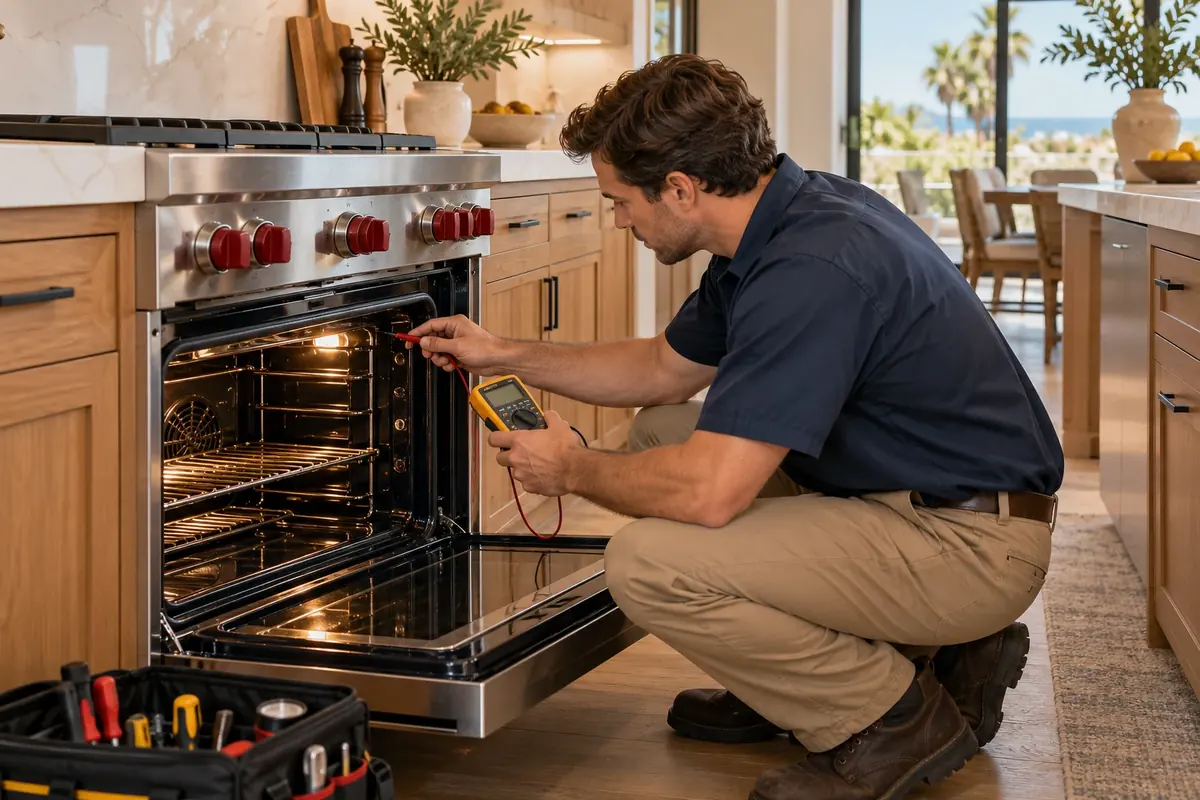
Testing thermostats, bias heaters, and heating elements typically requires a multimeter and an understanding of the wiring involved. If that’s outside your comfort zone, attempting it yourself can turn a moderate repair into a bigger one, a pattern explained well in this breakdown of the hidden costs of DIY appliance repair.
You Can’t Pinpoint Which Component Is Actually Failing
Sometimes multiple systems interact in ways that make the root cause hard to isolate without proper diagnostic tools. A technician can narrow it down far faster than continued guesswork, and a company familiar with the appliances and homes common in this area makes that process even smoother, something worth keeping in mind when finding a trustworthy appliance repair company in Riverside County.
A dryer running too hot is never something to ignore or wait out. Start with the simple airflow checks, since those resolve the majority of overheating cases. If the problem continues after that, it’s a clear sign something electrical needs professional attention, and catching it early protects your clothes, your dryer, and your home.
The team at Appliance Repair Murrieta has helped homeowners across the area diagnose everything from simple vent blockages to failed thermostats and heating elements, so if your dryer is still running hot after working through this guide, reach out to our team and we’ll help you get it running safely again.