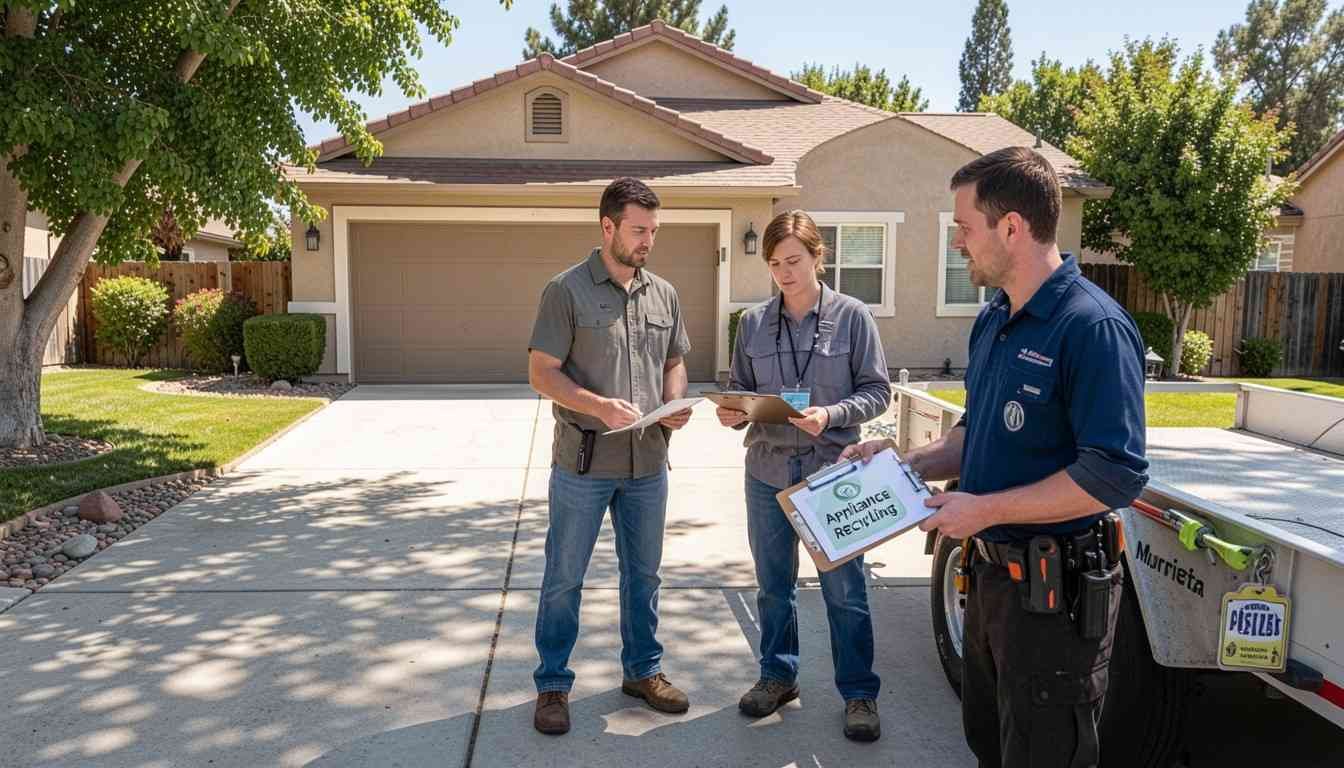
If you have an old fridge in the garage, a dead washer on the side yard, or a failed AC condenser sitting by the fence, you are not alone. In Murrieta, many homes and businesses hold on to broken appliances because recycling them feels confusing or expensive. However, California and Riverside County treat appliances very specifically, and you can avoid fines, protect the environment, and clear space if you handle them the right way.
This guide shows you how recycling old appliances works in Murrieta for both residential and commercial properties, what your real options are in 2026, and how to decide if you should repair or recycle first.
Why appliance recycling matters in Murrieta
Old appliances do more than take up space. They can leak refrigerant, oil, or other regulated materials if you dump them or leave them exposed. Riverside County Waste Resources explains that appliances require special handling at county facilities and treats them differently from normal household trash in its landfill and recycling guidance.
For you, proper recycling does three things:
- It keeps you clear of illegal dumping problems.
- It protects your property and neighbors from hazards.
- It opens room for new, efficient appliances that cost less to run.
If you want to see how local conditions accelerate wear on refrigerators, washers, dryers, and HVAC systems, read how the California climate impacts your appliance lifespan before you decide that an appliance is “too old” to save.
What counts as “appliances” in Riverside County
Riverside County Waste Resources lists major household appliances such as refrigerators, freezers, washing machines, dryers, dishwashers, and stoves under appliance-specific rules. Many of these units contain metals, oils, and sometimes refrigerants that need special handling.
Small devices like microwaves, coffee makers, and some electronics may fall into small appliance or e‑waste categories. CalRecycle provides guidance on where to recycle e‑waste in California and lists electronics drop-off options that work alongside local appliance disposal programs.
If you are not sure whether your item counts as an appliance, you should check county guidance or call a site before you load the truck.
Local Murrieta and Riverside County options
You have several ways to recycle old appliances in Murrieta.
Riverside County facilities
Riverside County Waste Resources explains which landfills accept appliances and notes that appliances may carry special handling fees. Some facilities accept certain appliance types only, so you should always confirm before you go.
Certified appliance recyclers
The Riverside County Department of Environmental Health maintains a list of certified appliance recyclers that are authorized to handle appliances containing refrigerants and other Materials Requiring Special Handling (MRSH). These businesses recover refrigerant, oil, and other regulated materials before metal recycling.
Private pickup and haul-away
Several services advertise appliance pickup and recycling for Murrieta, including “free appliance pickup” and junk removal with recycling. The fine print often depends on scrap value, accessibility, and unit condition, so you should ask about fees, surcharges, and what “recycling” actually means.
Curbside and bulky item programs
Your trash provider may offer bulky item pickup options that include appliances, but rules on refrigerant-containing units and limits per pickup can apply. Confirm what they accept and whether they require door removal or other prep.
If you want to pair responsible disposal with smarter replacement choices, you can review eco‑friendly appliances saving water and energy in California before you buy something new.
Residential vs commercial rules
If you handle appliances for your home, you usually fall under residential recycling and bulky item guidelines. Riverside County residential recycling information encourages reuse and proper disposal and highlights programs that serve households.
If you are a business or property manager, you may be treated as a commercial generator. Certified appliance recycler listings and county information indicate that businesses must use appropriate disposal channels and cannot rely on residential “free days” or small-load rules.
That means a restaurant, a laundromat, or a multi‑unit property with several appliances to retire will need a structured plan rather than a casual drop-off.
What you must prepare before recycling
You should never vent refrigerant or dismantle sealed systems yourself. Riverside County explains that certified appliance recyclers are responsible for removing refrigerant and MRSH components, and they must follow strict recovery standards.
Before you recycle, you should:
- Remove food, clothes, and personal items.
- Secure or remove loose shelves, racks, and drawers that can fall out during transport.
- Confirm whether the recycler wants doors removed for safety, especially on refrigerators and freezers.
- Clear paths for safe removal if a service will pick up from inside your home or business.
- Wipe the unit down so it is safe and easier to handle for staff.
For smart appliances, you should also remove or reset any connected features that store Wi‑Fi credentials or personal data.
Refrigerant and MRSH rules in California
Many refrigerators, freezers, dehumidifiers, and AC units contain refrigerants that are regulated due to their environmental impact. Riverside County highlights that appliances containing refrigerants and other MRSH items must be processed by certified appliance recyclers who recover these materials before recycling metal components.
For your safety and compliance:
- Do not puncture or cut refrigerant lines.
- Do not attempt to remove compressors or sealed-system parts to “strip for scrap.”
- Use a certified recycler or a program that clearly states how it handles refrigerants.
If you are retiring an HVAC system and planning a replacement, you can avoid efficiency mistakes by reading choosing the right HVAC system for Murrieta’s microclimate before you sign off on a new unit.
Local pickup, haul-away, and “free” services
Murrieta residents see ads for “free appliance pickup” and fast junk removal. In practice, pickup models vary. Some services provide free pickup based on scrap metal value and may refuse units that are too old, too damaged, or too far from the driveway. Others charge fixed or per‑item fees but include labor, loading, and responsible recycling.
Before you book, ask:
- “Do you recycle the appliance or take it to a landfill?”
- “Is pickup truly free, or are there conditions?”
- “Are there extra charges for refrigerators, freezers, or AC units?”
Clarity on the phone saves you from surprise charges in the driveway.
Donating working appliances
If your appliance still works safely, donation may beat recycling. Riverside County residential recycling guidance highlights the value of reuse and encourages residents to donate usable items.
Donation helps you:
- Extend the useful life of the appliance.
- Support a local family, charity, or small business.
- Reduce immediate disposal and replacement waste.
You should confirm:
- That the appliance works reliably and safely.
- That the receiving organization accepts that type, age, and size of appliance.
- That you can provide basic details like age, brand, and known issues.
If you plan to replace a still‑working unit with something more efficient, make your upgrade smarter by checking energy rebates available for Murrieta homeowners in 2026 so you do not leave money on the table.
When to repair instead of recycle
Recycling is important, but early recycling can waste money and resources. As an appliance repair company, we see many units that owners want to scrap, even though a repair could give them years of life.
Repair makes sense when:
- The appliance is mid‑life and has a clear, fixable issue.
- The repair cost is well below replacement.
- The model is efficient enough that extra years of use still make financial sense.
Recycling or replacing makes more sense when:
- The appliance fails often or has multiple serious issues.
- The unit drives high energy or water bills due to poor efficiency.
- Parts are no longer available or repairs approach replacement cost.
If you want a step‑by‑step way to vet repair companies before you let anyone touch your appliances, review finding a trustworthy appliance repair company in Riverside County and use that checklist while you talk to vendors.
Costs, fees, and hidden charges
Riverside County Waste Resources notes that some landfills charge appliance surcharges and that fees vary by facility and appliance type. Certified recyclers may also charge for handling MRSH components like refrigerants, oils, or capacitors.
You may encounter:
- Per‑item appliance fees at disposal sites.
- Extra charges for refrigerator and AC units that contain refrigerant.
- Pickup fees from private services for labor and transport.
Always ask:
- “What will this appliance cost me to drop off or have picked up?”
- “Are there separate fees for refrigerant removal?”
- “Do you provide a receipt or proof of proper disposal?”
Keeping documentation helps if questions arise later, especially for businesses and property managers.
Small appliances and electronics
In 2026, California continues to tighten control on e‑waste and battery disposal. Guidance on e‑waste regulations in California explains that many electronics and battery-containing devices should not go to landfills and must go through approved channels. CalRecycle also offers a search tool to help you find e‑waste drop-off locations.
For small items:
- Bring battery-embedded devices to e‑waste or HHW events instead of regular trash.
- Remove loose batteries and place them in separate battery recycling streams.
- Do not mix e‑waste with metal-only appliance loads.
Combining an appliance trip with an e‑waste drop can clear out a lot of clutter safely.
What you should never do with old appliances
You should avoid:
- Leaving appliances on the street without scheduled bulky pickup.
- Dumping appliances in fields, empty lots, or flood channels.
- Cutting coils or lines to “let gas out” or trying to strip regulated components yourself.
Riverside County hazardous waste flyers emphasize proper routes for HHW and warn against illegal dumping and unsafe disposal methods. Violations can lead to cleanup costs and potential enforcement actions.
If your old appliance is part of a pattern of high bills and waste, it also helps to scan top 5 energy‑wasting habits in Murrieta homes so you can break the habits that cause premature failures.
Simple Murrieta appliance recycling checklist
Here is a quick, practical flow for your next old appliance:
- Decide if the unit is a candidate for repair or if it is clearly end‑of‑life.
- If you want a professional opinion, schedule a local appliance or HVAC inspection.
- Check Riverside County Waste Resources for appliance acceptance rules and any current fees.
- If drop-off is not practical, compare at least two pickup services and ask about their recycling practices and charges.
- Prepare the unit by cleaning it, securing loose parts, and following any door or safety instructions.
- Keep receipts or drop-off documents as proof of proper disposal.
If your old appliance is an AC unit or heat pump that struggled for years before failing, you can avoid the same pattern by reading what to look for in a local Murrieta HVAC contractor before you choose a replacement installer.
If you are unsure whether to repair, recycle, or replace an appliance or HVAC system, you do not have to guess. Appliance Repair Murrieta can inspect your home appliances and HVAC equipment, explain your options in plain language, and help you avoid both unnecessary replacements and unsafe delays. When you are ready to schedule or ask a quick question, you can reach the team easily through the contact page of the site.