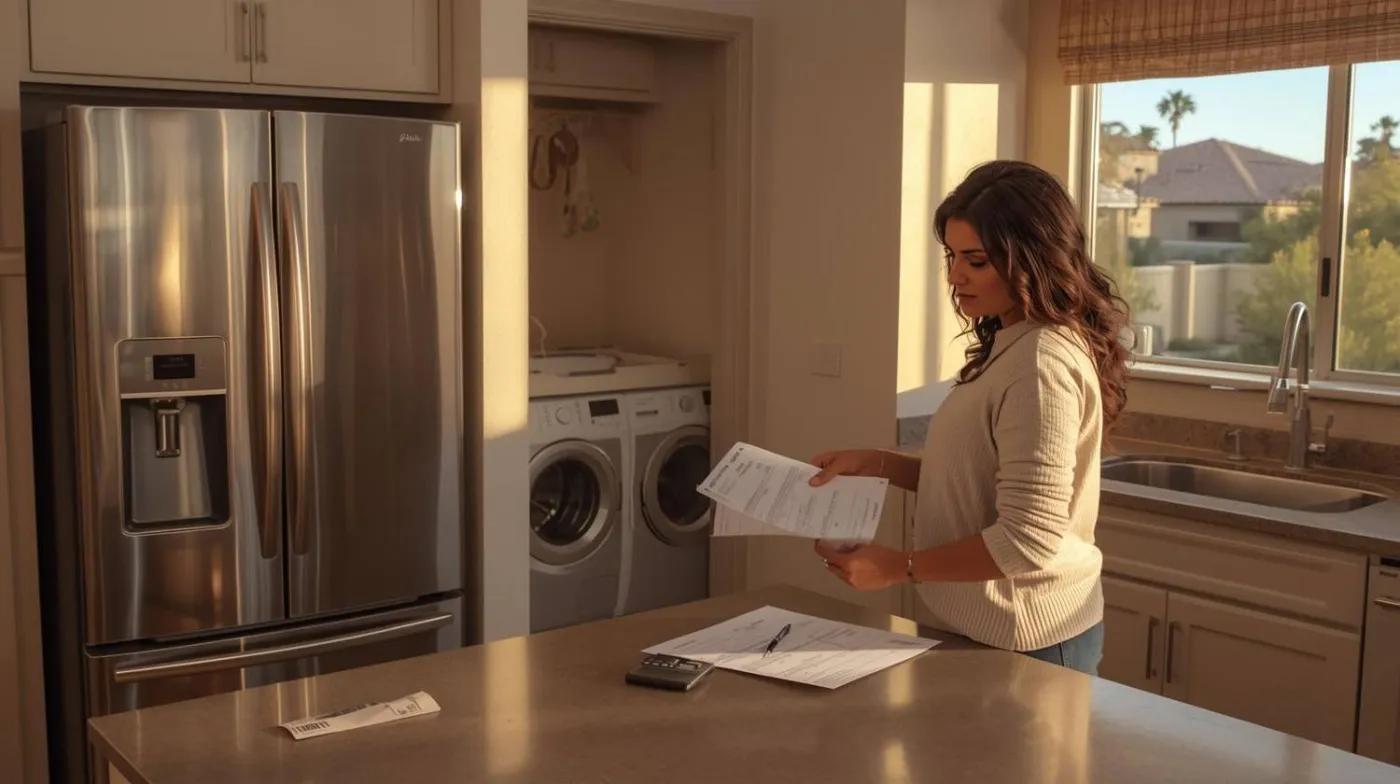
You reach a point with every fridge, washer, or HVAC system where you ask the same question. Do you put more money into repairs, or do you replace the appliance and start fresh? In 2026, with higher equipment prices and energy costs, this decision matters more than ever for Murrieta homes and businesses.
This guide gives you a clear, practical way to weigh repair versus replacement using real cost ranges, lifespan data, and simple rules you can actually use.
Why this decision matters more in 2026
Recent cost guides show that average appliance repair bills in 2026 range from roughly low hundreds for simpler jobs to over a thousand dollars for complex sealed-system, control board, or HVAC work. At the same time, new major appliances and HVAC systems often cost significantly more than they did a few years ago, especially if you want higher efficiency.
If you choose poorly, you can:
- Spend hundreds on a short‑term repair for an appliance that fails again.
- Replace too early and throw away years of possible service life.
- Miss energy savings and potential rebates that could soften the cost of a smart upgrade.
You protect your budget when you combine age, repair cost, energy efficiency, and local conditions in a simple framework. For background on why local conditions matter, take a look at how the California climate impacts your appliance lifespan and keep those factors in mind as you read.
How much appliance repair really costs in 2026
Different sources give slightly different numbers, but 2026 cost guides generally land in similar ranges.
Typical repair ranges:
- Refrigerators and freezers: moderate to high repair costs, especially for sealed-system and compressor work.
- Washers and dryers: lower to moderate costs for pumps, belts, and motors, with higher costs for drum, bearing, or control issues.
- Dishwashers: low to moderate for pumps, valves, and controls.
- Ovens and cooktops: usually moderate, often manageable for elements and igniters.
- HVAC systems: wide range, from a few hundred dollars for simpler repairs to several thousand for coils, compressors, or major component replacement.
On most invoices, you see:
- A diagnostic or service-call fee.
- Labor charges by hour or as a flat rate.
- Parts cost with markup.
- Taxes and sometimes trip or disposal fees.
Knowing these ranges helps you compare repair quotes against replacement prices in a realistic way.
How long appliances usually last today
Average lifespan data from home and inspection resources create rough ranges you can use as a reference.
Approximate lifespans:
- Refrigerators: 10 to 15 years.
- Freezers: 12 to 20 years.
- Washing machines: 8 to 12 years.
- Dryers: 10 to 13 years.
- Dishwashers: 8 to 12 years.
- Electric and gas ranges: 12 to 15 years or more.
- Central air conditioners and heat pumps: 12 to 18 years, depending on maintenance and load.
Some newer appliances use more electronic controls and lighter components, so they sometimes fail earlier than older, heavier units, even though they may be more efficient. That is why combining age with condition and repair history is more important than ever.
The 50% cost rule and how to use it
Many appliance and equipment experts use some version of the “50% rule.”
In simple terms:
- If the repair cost exceeds 50 percent of the price of a comparable new appliance
and - The appliance is beyond the first half of its expected life,
then replacement usually makes more long‑term sense.
You can think of it as:
- Early life plus low repair cost: repair.
- Late life plus high repair cost: replace.
- Middle cases: use energy efficiency, reliability, and your budget to break the tie.
The 50% rule is not a law, but it gives you a starting point. It works best when you have accurate repair quotes and realistic replacement pricing.
Appliance-by-appliance guide: repair vs replace
Each appliance type has different stakes and cost dynamics.
Refrigerators and freezers
Refrigerators are expensive to replace and often costly to repair, especially for compressor and sealed-system work.
Repair leans smart when:
- The fridge is under 8 to 10 years old.
- The problem is a clear, non‑sealed-system issue such as a fan, thermostat, defrost component, or ice maker.
- Repair cost is well below half of a new fridge and efficiency is still reasonable.
Replacement leans smart when:
- The unit is 12 to 15 years old or older.
- The problem involves the compressor or multiple major components.
- The repair cost climbs near or past 50 percent of a suitable replacement.
- You already see high energy use or poor temperature control.
Food safety and energy savings often push refrigerators further toward replacement once they pass a certain age.
Washing machines and dryers
Washers and dryers sit in the lower to mid-cost range for repair and replacement.
Repair leans smart when:
- The appliance is under about 8 years old.
- Issues involve belts, pumps, simple valves, or minor control faults.
- The unit has a good service history and no recurring leaks or bearing noise.
Replacement leans smart when:
- The washer or dryer is at or beyond typical life and has repeated problems.
- You hear bearing roar, see chronic leaks, or face a major drum or motor repair.
- The repair cost and age together cross the 50 percent rule threshold.
Since laundry appliances often come in sets, you may also think about aesthetics and capacity when you decide.
Dishwashers
Dishwashers are less expensive than many other major appliances, but they can still justify repair.
Repair leans smart when:
- The unit is under 7 to 8 years old.
- Problems involve clogged filters, minor leaks, or single pump or valve failures.
- Cabinet and racks are still in good physical condition.
Replacement leans smart when:
- The dishwasher is 10+ years old with rusting racks or tub issues.
- Control board and pump problems stack up over time.
- Repair costs approach half of a mid‑range new unit.
Ovens and cooktops
Ranges and ovens tend to last longer.
Repair often stays attractive for longer because:
- Elements, igniters, and thermostats are often cheaper parts.
- The appliance’s basic structure usually holds up well.
Replacement should move into view when:
- The unit is older and suffers repeated board or safety issues.
- Repair parts are hard to source or extremely expensive relative to a new range.
HVAC systems
HVAC is different because repair and replacement costs are both high, and Murrieta’s microclimate pushes systems hard.
Lifespan guidance for HVAC equipment suggests 12 to 18 years for many systems, depending on maintenance.
Repair leans smart when:
- The system is under 10 years old.
- Issues involve single components like capacitors, contactors, or simple sensors.
- The coil and compressor still test well.
Replacement leans smart when:
- The system is in the 12 to 18+ year range.
- You face major coil or compressor issues or need several expensive parts at once.
- Efficiency is low compared to current standards and you deal with repeated comfort complaints.
Because HVAC choices affect comfort and energy use across your whole building, it helps to read choosing the right HVAC system for Murrieta’s microclimate before you commit to a new installation.
How energy efficiency and Murrieta’s climate affect your math
Energy costs are a key part of your decision, especially in a climate with long cooling seasons.
Recent cost guides show that inefficient or failing appliances can materially increase your monthly bill. An old refrigerator, for example, may use much more electricity than a new efficient model. A tired HVAC system with poor airflow or refrigerant issues can also drive bills higher.
In Murrieta, you feel this through:
- Longer AC run times in hot months.
- Continuous refrigerator and freezer operation in warm kitchens or garages.
- Dryer and washer loads that repeat due to poor performance.
If your energy bill has jumped and you see signs of strain from your appliances, it may be worth factoring efficiency gains into your replace-versus-repair calculation. To go deeper on that side of the decision, you can review eco‑friendly appliances saving water and energy in California and apply that thinking to your upgrade list.
Signs that point to repair first
Repair tends to be the better first call when:
- The appliance is in the first half of its expected life.
- The problem is clear and limited to one component.
- There is no sign of major structural, sealed-system, or safety damage.
- Energy use and performance have been normal until recently.
Examples:
- A relatively new dishwasher with a leaking inlet valve.
- A five‑year‑old washer with a worn pump.
- A mid‑life oven with a failed bake element.
- An HVAC system under 10 years old with a failed capacitor or contactor.
In these cases, a proven appliance repair company can often restore full function at a fraction of replacement cost.
Signs that point to replacement
Replacement becomes the smarter path when:
- The appliance is near or past typical lifespan.
- It has a history of frequent breakdowns and repeat service calls.
- The current repair estimate is high and other parts show visible wear.
- There are safety concerns involving gas, wiring, or overheating.
Examples:
- A 15‑year‑old fridge with compressor and board issues.
- A 12‑year‑old washer with bearing noise and chronic leaks.
- A 17‑year‑old HVAC system with coil corrosion and failed compressor.
- A dishwasher with a rusting tub, failing board, and high repair estimate.
If you decide to replace, you will also need to decide what to do with the old unit. For a local and compliant disposal plan, see recycling old appliances in Murrieta: what you need to know.
Big-picture financial strategy for homes and small businesses
You can make this process less stressful by planning instead of reacting.
Practical steps:
- Keep a simple list of your major appliances with purchase dates and basic repair history.
- Use current cost guides to estimate replacement prices for the “big six” items in your home or property.
- Set aside a small monthly amount as a dedicated appliance and HVAC fund.
For HVAC and larger upgrades, you can also reduce net cost with incentives. Local and statewide programs in California offer energy-related rebates for qualifying improvements, especially on the HVAC and efficiency side. For a closer look at that angle, you can review energy rebates available for Murrieta homeowners in 2026 before you finalize your upgrade plan.
Environmental and disposal considerations in Riverside County
Repair does more than save money. It also reduces waste when the appliance or system still has a reasonable service life left. Replacement, however, becomes necessary at some point, and then responsible disposal matters.
Riverside County treats major appliances and HVAC equipment as items that need special handling and recycling, especially when they contain refrigerants or other regulated materials. If you replace, you should:
- Confirm how your installer or retailer handles haul‑away and recycling.
- Use county resources and certified recyclers for units with refrigerant.
- Avoid illegal dumping or leaving appliances where they can become hazards.
This is another reason to plan replacement instead of waiting for a complete failure.
How a Murrieta appliance repair company should guide you
A strong appliance repair company in Murrieta should help you make this decision, not push you in one direction.
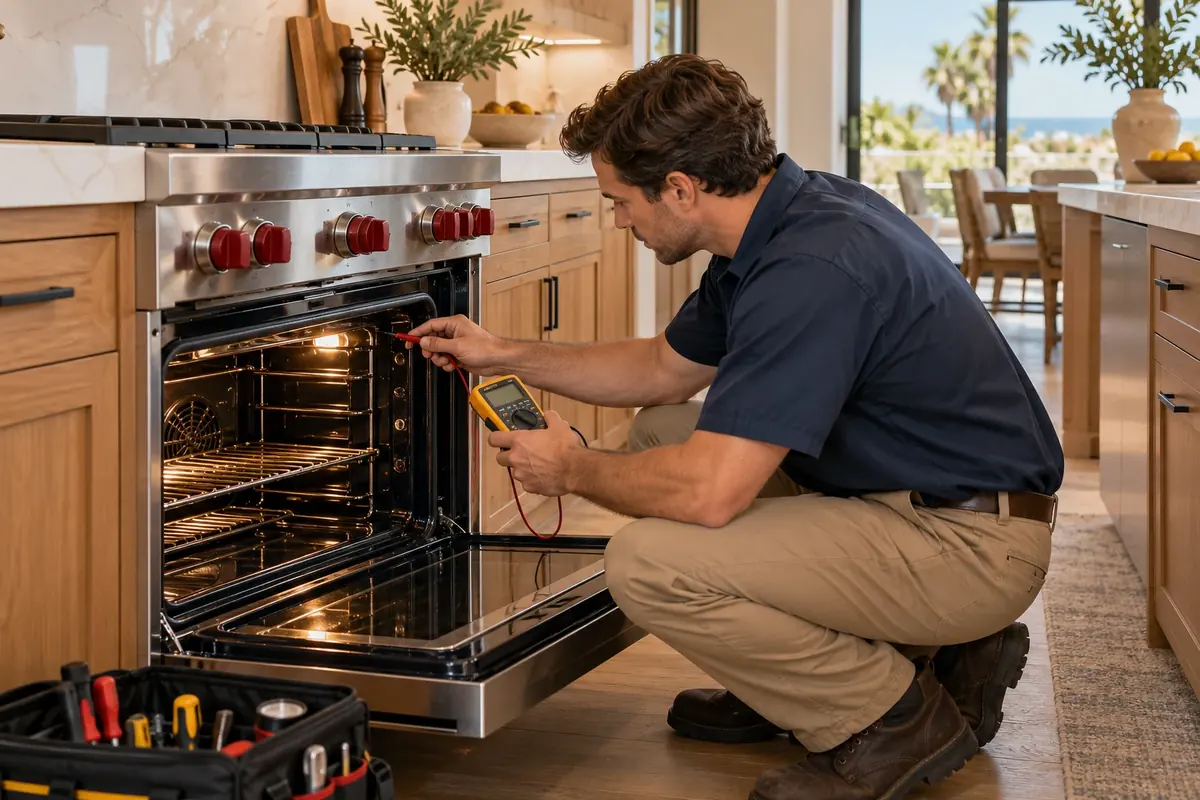
During a visit, a good technician will:
- Inspect the appliance or system and confirm the root cause of the problem.
- Explain which parts failed and why, in clear language.
- Estimate repair cost and discuss how long the appliance is likely to last after repair.
- Compare that estimate to a reasonable replacement cost range.
For HVAC decisions or multi‑appliance situations, it can also be helpful to use a framework like what to look for in a local Murrieta HVAC contractor to make sure you are working with someone who gives honest guidance.
You should feel free to ask directly, “If this was your home or business, would you repair or replace?” and expect a reasoned answer that lines up with the age and condition of the appliance.
If you are stuck between repairing or replacing an appliance right now, the fastest way to reach a clear answer is a focused diagnostic visit. A local team like Appliance Repair Murrieta can examine your equipment, quote repair and replacement paths, and help you line up those numbers with your priorities for comfort, efficiency, and budget, without pressure.