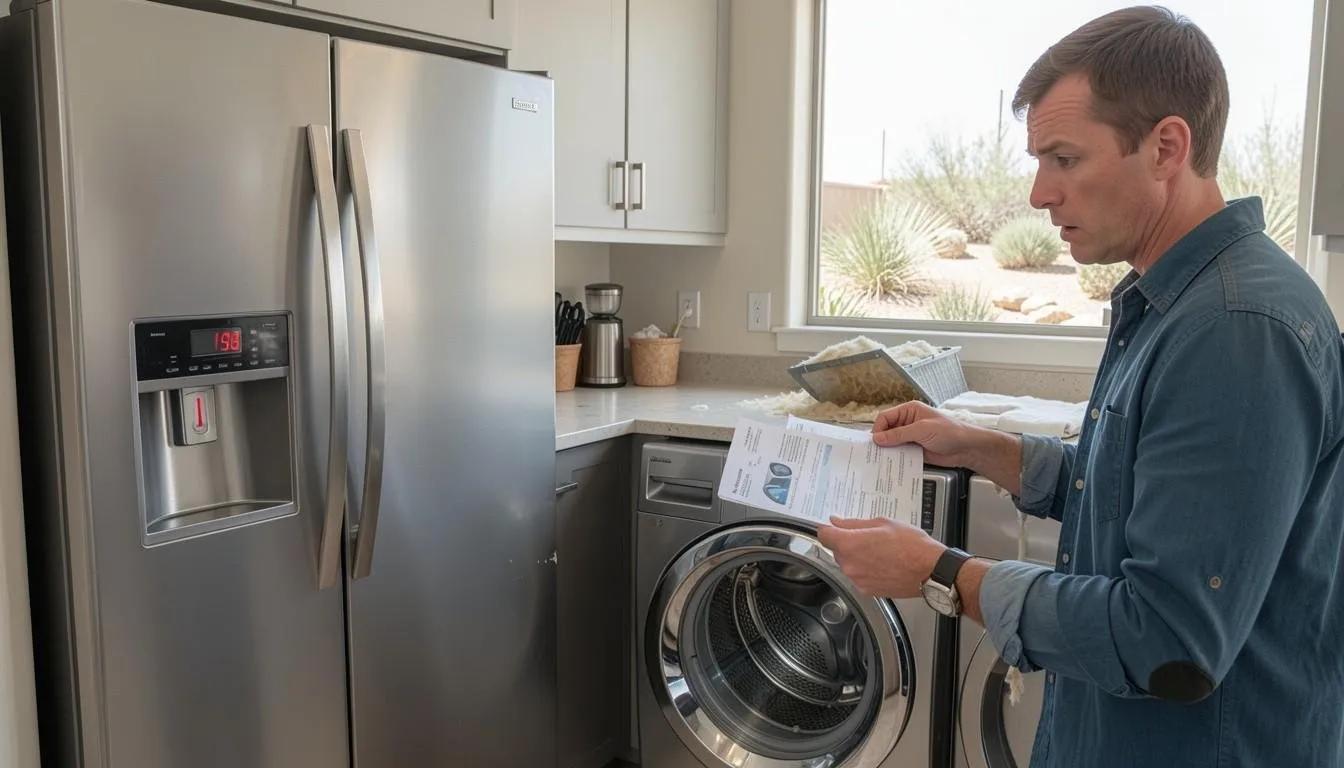
Appliances rarely fail “out of nowhere.” They almost always send you warning signs first. If you learn to spot those signs early, you can schedule home appliance repair or HVAC repair on your terms instead of scrambling during a breakdown.
In Murrieta, early action also matters because heat, hard use, and power spikes put extra stress on your equipment. You protect your budget and your comfort when you respond before a small symptom becomes a major failure.
Why catching problems early matters in 2026
Appliance repair costs continue to rise, and replacement prices for major units like refrigerators and HVAC systems are higher than in past years. Recent cost guides show that individual appliance repairs often fall in the low hundreds, while full replacements can reach into the thousands depending on the brand and capacity.
If you act when you see early warning signs, you can usually:
- Avoid food loss and water damage.
- Keep your energy bills from creeping up.
- Extend the useful life of your existing appliances.
If you want more context on how heat and local conditions shorten appliance life, it helps to read how the California climate impacts your appliance lifespan and connect that information with the signs in this guide.
How long major appliances usually last
Typical ranges in 2026 look like this, based on current repair and replacement cost data.
- Refrigerators: 10 to 15 years, sometimes longer with good maintenance.
- Washing machines: 8 to 12 years.
- Dryers: 10 to 13 years.
- Dishwashers: 8 to 12 years.
- Ovens and ranges: 12 to 15 years.
- Central HVAC systems: 12 to 18 years, depending on maintenance and load.
These are averages, not rules. Your actual decision should combine age with the specific signs you see and the cost to repair versus replace.
Sign 1: Your refrigerator struggles to hold temperature
This is one of the most important red flags because it puts food safety at risk.
Current guides on failing refrigerators warn about:
- Warm spots on shelves and door bins.
- Milk and leftovers spoiling before their date.
- Freezer burn in one area and soft items in another.
- Frost build-up on the back wall or around vents.
You might also notice that the back or sides of the fridge feel very hot and the compressor runs almost all the time. Articles on compressor failure note that constant running and unusual heat are strong signs that the system struggles to move heat out.
Action steps:
- Place a simple fridge thermometer on a middle shelf and check if it stays near 37–40°F.
- Listen for constant running with almost no quiet periods.
- Check door seals for gaps or cracks.
If you see all three at once, you should schedule refrigerator repair before the compressor or control system fails completely.
Sign 2: Your refrigerator becomes much louder
Noise is another common early sign. Appliance blogs list noises like:
- Buzzing or humming that seems louder than normal.
- Knocking or clunking when the compressor starts or stops.
- Rattling from loose components.
- High-pitched squeals from fan motors.
Some noise changes come from loose panels or items touching the cabinet, but persistent new noise often means wear in fans, motors, or the compressor.
Action steps:
- Pull the fridge out carefully and check that it sits level.
- Make sure nothing touches the back panel or condenser area.
- If noise continues or worsens, book a service visit before a part fails and overheats.
Sign 3: Your washing machine walks, leaks, or leaves clothes dirty
A washing machine that “walks” across the floor or shakes aggressively is not just annoying. It signals an imbalance or failing suspension parts. Recent repair articles point to these specific signs:
- Excessive vibration even with small loads.
- The machine moves during spin cycles.
- Repeated out-of-balance errors or incomplete cycles.
- Leaks around the door or from under the cabinet.
- Clothes that come out with detergent residue or still smell dirty.
These symptoms can mean worn suspension rods, dampers, bearings, or a failing drain pump.
Action steps:
- Confirm that the machine is level and that the floor is stable.
- Avoid overloading, especially with heavy items like towels and blankets.
- If vibration or leaks persist, schedule repair before the drum or motor suffers more damage.
Sign 4: Your dryer takes forever or smells hot
Dryers give several clear warning signs before they fail.
Common indicators include:
- Clothes take longer than one normal cycle to dry.
- The drum spins but air feels cool or only lukewarm.
- You smell a hot or burning odor from the dryer or vent.
- The top or sides of the dryer feel hotter than usual.
While some issues come from vent restrictions, a persistent problem after you clean the vent can point to heating element, thermostat, or motor issues.
Action steps:
- Clean the lint filter before every load.
- Inspect and clean the vent duct from the back of the dryer to the wall exit.
- If drying is still slow or you smell heat, stop using the dryer and call for service due to fire risk.
Sign 5: Your dishwasher leaves grit, film, or standing water
A failing dishwasher often shows up in your sink and on your dishes before you hear any strange sound.
Warning signs include:
- Dishes that still feel greasy or come out with a white film, even with proper loading and detergent.
- Food particles stuck to dishes and the interior.
- Standing water in the bottom of the tub after a cycle.
- New leaks at the door or from under the unit.
These symptoms may indicate clogged filters, failing wash pumps, worn spray arms, or drain problems.
Action steps:
- Clean the filters and check the spray arms for blockages.
- Run a cleaner through the dishwasher to remove buildup.
- If performance does not improve or water remains at the bottom, call a technician before the motor burns out.
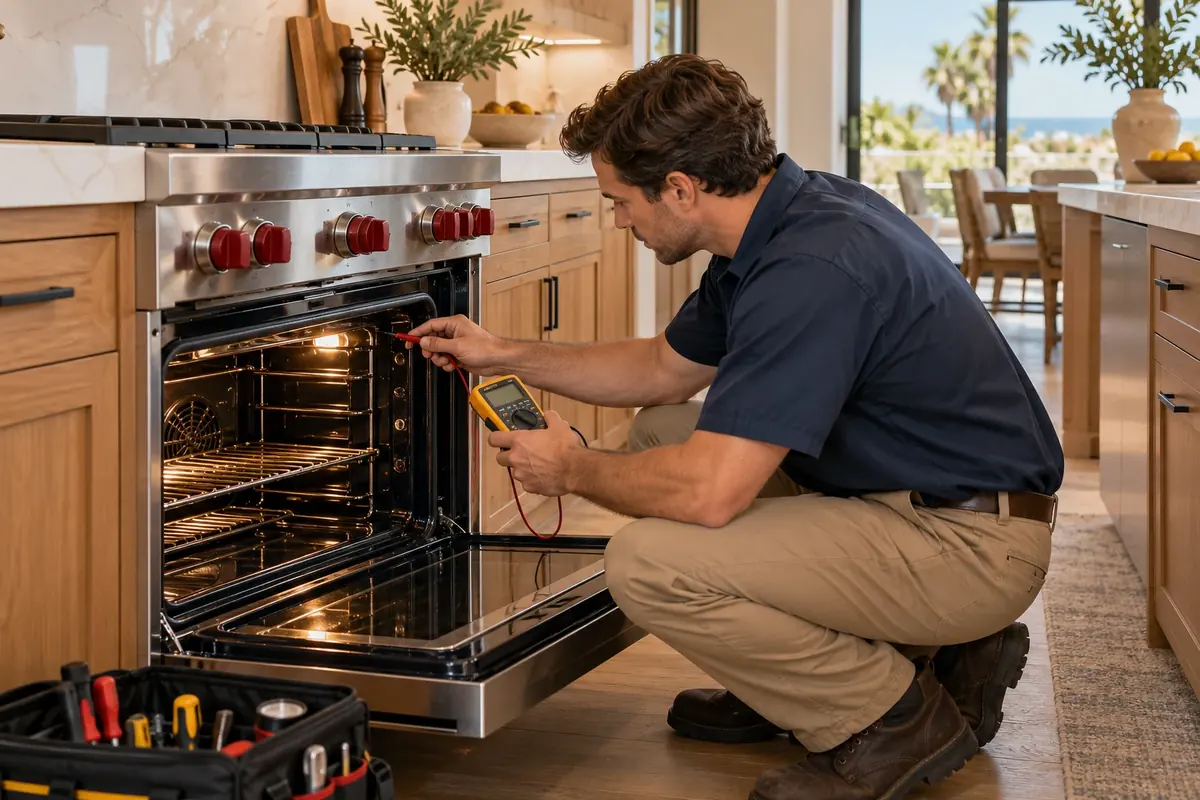
Sign 6: Your oven or cooktop cannot hold temperature
Cooking appliances usually fail slowly.
Common issues include:
- The oven takes far longer than normal to preheat.
- Baked items burn on one side and stay raw on the other.
- Electric burners flicker or cycle off and on at strange times.
- Gas burners struggle to ignite or make popping sounds.
These problems often relate to worn elements, igniters, sensors, or control boards.
Action steps:
- Use an oven thermometer to compare set temperature with actual temperature.
- Note which burners or modes have problems for your service call.
- If you smell gas or see sparking, stop using the appliance and call for repair immediately.
Sign 7: Your HVAC system runs longer, gets louder, or struggles in normal weather
Your HVAC system carries a heavy load in Murrieta. Outdoor condensing units and indoor air handlers both send early signals when they are under stress.
HVAC maintenance articles highlight signs like:
- The system runs much longer than before to reach the same temperature.
- You notice hot and cold spots that did not exist in prior seasons.
- The outdoor unit makes new rattling, buzzing, or grinding sounds.
- You hear whistling or banging in your ductwork.
- Your thermostat reading and room comfort do not match.
These issues may point to airflow restriction, failing fan motors, low refrigerant, duct problems, or control issues.
Action steps:
- Replace or clean HVAC filters on schedule.
- Keep 2 to 3 feet clear space around your outdoor unit and clear leaves and debris.
- Schedule professional HVAC repair if noise, run time, or comfort change noticeably.
To better understand how local heat patterns stress your system, it helps to read choosing the right HVAC system for Murrieta’s microclimate and compare your current setup to best practices.
Sign 8: Your utility bills spike with no clear reason
A sudden increase in electric or gas bills often points to appliance or HVAC problems. Recent cost analyses show that failing motors, inefficient compressors, and weak heaters drive energy use up significantly over time.
You should pay attention if:
- Your electric bill jumps compared to the same month last year.
- You have not changed your thermostat habits or runtime.
- Nothing else in the home explains the spike.
Possible causes include:
- A refrigerator that runs constantly to maintain temperature.
- An HVAC system fighting restricted airflow or low refrigerant.
- A dryer with a partially blocked vent that takes multiple cycles.
Action steps:
- Compare your current bill to last year’s numbers for the same month.
- Note which appliances seem to run more often or longer than before.
- Consider pairing an energy bill review with the strategies in top 5 energy-wasting habits in Murrieta homes to separate habit issues from equipment problems.
Sign 9: Breakers trip, appliances reset, or error codes appear
Electrical issues and error codes are serious warning signs.
You may see:
- A breaker that trips repeatedly when one appliance runs.
- An appliance that randomly resets or shuts down.
- Digital panels that show blinking lights or specific error codes.
Frequent trips or resets can mean short circuits, failing motors, or board issues. Ignoring these events can lead to fire risk or total appliance failure.
Action steps:
- Do not keep resetting the breaker without addressing the cause.
- Write down any error codes and conditions when they appear.
- Schedule professional diagnosis so a technician can check wiring, motors, and boards safely.
Sign 10: Age plus one or more of these signs
Age alone does not mean you must replace an appliance, but age plus one or more strong warning signs usually demands action.
Repair cost references suggest using a simple rule. If an appliance is beyond about two thirds of its typical life and the repair cost approaches half the price of a comparable new unit, replacement often makes more financial sense.
Examples:
- A 14‑year-old fridge with compressor issues.
- A 12‑year-old washer with repeated bearing or motor failures.
- A 17‑year-old HVAC system with major coil or compressor problems.
Action steps:
- Confirm the age of the appliance from receipts or model serial data.
- Get a written repair quote and compare it to current replacement prices.
- Factor in energy efficiency gains from modern equipment, especially for HVAC and refrigerators.
If you decide to replace equipment rather than repair it, you can plan disposal more responsibly with the help of recycling old appliances in Murrieta: what you need to know.
How to decide: repair now, plan replacement, or replace immediately
You can use a simple decision grid.
Repair now:
- Appliance age is in the first half of its expected life.
- Problem is clear and limited, like a failed valve, igniter, or pump.
- Repair cost is far below half the price of a new appliance.
Plan replacement:
- Appliance age is mid to late life.
- You see repeated minor issues or a significant energy-use increase.
- Repair cost is moderate and gives you time to budget.
Replace immediately:
- Safety is at risk because of wiring, gas, or overheating problems.
- Age is near or beyond typical life span and failure is major.
- Repair cost approaches or exceeds half the price of a new model.
A good technician will help you make this call. If you want a framework to choose a reliable provider, you can refer to finding a trustworthy appliance repair company in Riverside County and use that checklist before you book anyone.
Preventive habits that catch problems earlier
You limit surprise breakdowns when you combine early signs with good habits.
For appliances:
- Clean refrigerator coils and check door seals regularly.
- Level your washing machine and keep loads balanced.
- Clean dryer vents and lint filters to reduce heat stress.
- Rinse dishwasher filters and check spray arms.
For HVAC:
- Replace filters on schedule and keep outdoor units clear.
- Book annual maintenance checks before peak heat seasons.
If you want to cut both energy waste and breakdown risk, it also helps to look at eco‑friendly appliances saving water and energy in California, then align your maintenance and replacement choices with those ideas.
How a Murrieta appliance repair company can help
A strong local appliance repair company does more than swap parts. During a diagnostic visit, a skilled technician will:
- Listen to your description of symptoms and review error codes.
- Inspect the appliance for wear, leaks, and hidden damage.
- Test key components and provide a clear explanation of what failed and why.
- Give you a written estimate and, when helpful, a repair‑versus‑replace perspective.
For commercial customers, a good partner also thinks about uptime, tenant or customer impact, and consistent record‑keeping across multiple properties.
If you already recognize one or more of these signs in your home or business, the safest move is to schedule a professional check before the next heatwave or busy season. A local team like Appliance Repair Murrieta can inspect your home appliances, explain which issues need urgent attention, and help you decide whether a smart repair or a planned replacement makes more sense for your budget.