Why DIY Looks Cheap at First
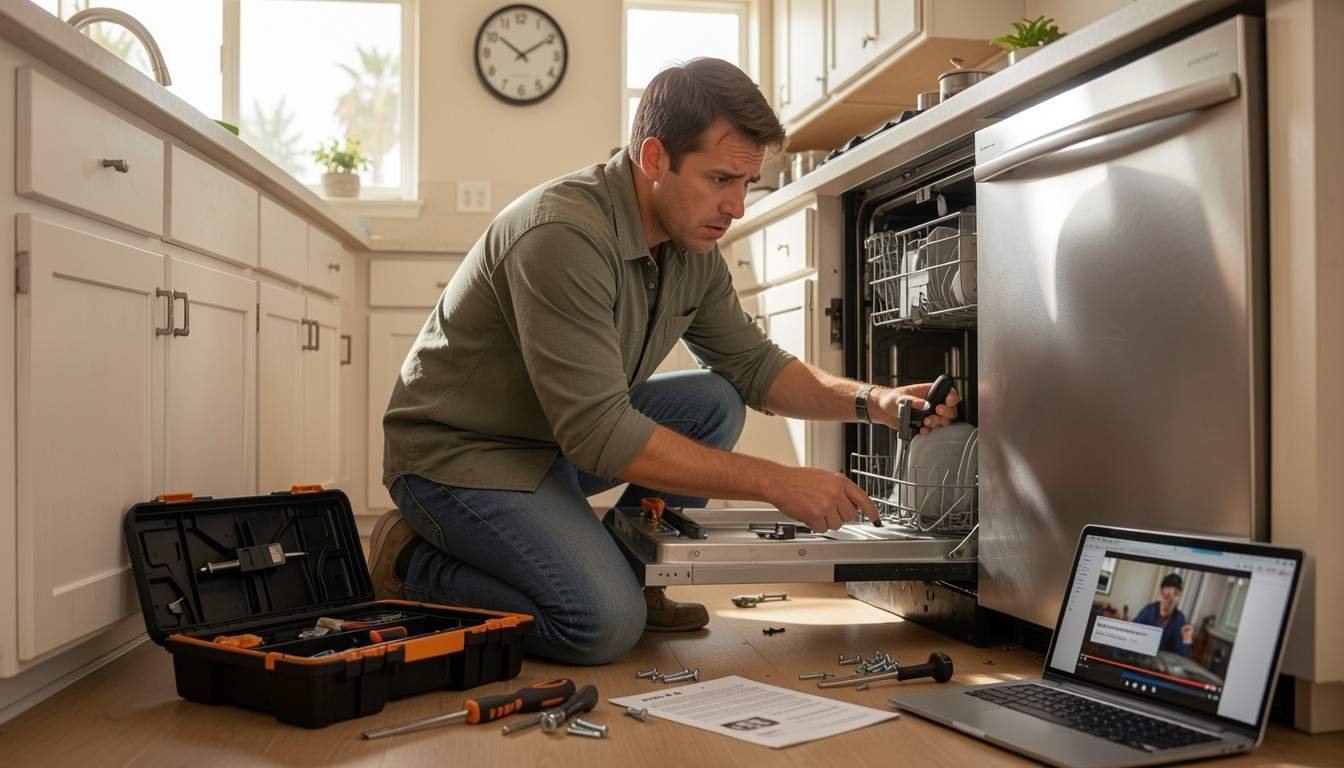
When your appliance stops working, DIY repair looks like the fastest way to save money. You may only see the price of a part, a few tools, and a free weekend. In 2026, that first impression still misleads a lot of homeowners and property managers because the real cost usually shows up after the first mistake, repeat failure, or safety issue.
For Murrieta homes and commercial sites, this matters even more because heat, run time, and utility costs already put stress on appliances and HVAC systems. A small error can raise your bill, damage the unit, or create downtime that costs more than a professional visit.
The Real Hidden Costs
DIY repair often costs more in the long run for five simple reasons. You can misdiagnose the problem, buy the wrong part, damage a second component, void a warranty, and lose time you could have spent on work or operations.
The financial side adds up fast:
- Diagnostic fees from a pro often sit around a modest service-call range, while a wrong DIY part or failed second attempt can easily exceed that amount.
- Some common appliance repairs in 2026 still fall in the $80 to $500 range depending on the fault, which means a bad DIY attempt can erase any savings quickly.
- Commercial downtime can create a bigger loss than the appliance repair itself because it affects tenants, staff, or customer service.
If you want a deeper look at the warning signs before a system fails, pair this topic with top 10 signs your appliances are about to break down.
Safety Risks You Cannot Ignore
DIY appliance repair becomes dangerous when the job involves electricity, gas, refrigerant, or high heat. High-voltage parts can shock you even after you unplug the appliance, and gas-related mistakes can lead to leaks, fire, or carbon monoxide risk.
You should stop and call a pro if you see:
- A burning smell, sparks, smoke, or a tripped breaker.
- A gas smell near an oven, stove, dryer, water heater, or HVAC component.
- A refrigerant leak or sealed-system issue on a refrigerator.
- Water near electrical parts or a flooded laundry area.
For HVAC work, the risk gets bigger because you also deal with larger electrical loads, fans, compressors, and sometimes refrigerant lines. That is why what to look for in a local Murrieta HVAC contractor is a useful reference before you attempt anything beyond basic maintenance.
What You Can Do Yourself
Not every task needs a technician. You can safely handle simple maintenance that does not involve disassembly, wiring, gas, or sealed systems. That includes filter changes, coil cleaning, clearing lint traps, checking plugs, and reading error codes before you call for help.
Good DIY jobs usually have three traits:
- They are visible.
- They are low risk.
- They do not require opening electrical panels or gas lines.
Examples include:
- Replacing an HVAC filter.
- Cleaning a refrigerator condenser coil.
- Clearing a dryer lint trap and vent cover.
- Resetting a control panel after a brief outage.
- Checking whether a dishwasher filter is clogged.
If your issue feels small but keeps coming back, use why is my electric bill so high, faulty appliances could be to blame to see whether your repair problem is also wasting energy.
What You Should Not Touch
Some repairs look simple but carry real risk. Refrigerators with sealed systems, HVAC compressors, gas appliances, control boards, motors, capacitors, and internal wiring should stay in professional hands.
You should not DIY:
- Refrigerator sealed-system or compressor work.
- Gas oven, range, or dryer repairs.
- HVAC electrical repairs or refrigerant work.
- Control board swaps on expensive appliances.
- Any repair that needs special testing tools or permits.
This is also where warranty protection matters. Some manufacturers restrict repairs to authorized technicians, so a DIY attempt can void coverage and turn a manageable issue into a full replacement cost.
Appliance-by-Appliance Reality
Each appliance has its own risk profile.
Refrigerators and freezers can seem manageable if you only need a gasket or coil cleaning, but once the cooling system itself fails, you need a trained tech. Older fridges also waste more power, so a bad repair can hurt your utility bill every month.
Washers and dryers often tempt DIY because parts look cheap online. The problem is that leaks, motor issues, board failures, and drum problems can multiply if you guess wrong.
Dishwashers can have simple filter or spray arm issues, but pump, heater, and board problems can turn into repeat leaks or poor wash results.
Ovens and cooktops are safety-heavy because they involve heat, electricity, and often gas. A small mistake can create a larger hazard than the original breakdown.
HVAC systems should almost always move to pro service once the job goes beyond a filter, drain line, or thermostat check. Hot Murrieta summers make this even more important because a weak fix can leave you with high bills and no cooling.
The 2026 Cost Picture
In 2026, appliance repair costs still vary by appliance and fault, but the numbers show why DIY can backfire. Many common repairs stay in the low hundreds, while more serious failures move much higher.
That means your real decision should compare:
- The repair quote.
- The age of the appliance.
- The risk of a repeat failure.
- The cost of wasted energy if the unit keeps running inefficiently.
In Murrieta, time-of-use rates and hot-weather runtime make efficiency matter. A bad repair on a refrigerator or HVAC unit can keep your bill high even after the appliance “works” again.
If your repair choice ties into long-term replacement planning, is it worth repairing your old appliance or should you replace it gives you the next step.
When You Should Call a Pro
Call a pro right away if:
- The appliance smells like gas, smoke, or burning.
- The breaker trips more than once.
- The unit leaks water near electricity.
- The appliance has a sealed-system, motor, compressor, or board issue.
- The repair affects warranty coverage or code compliance.
You should also call a pro if you already tried a basic fix and the same problem returned. That pattern usually means the root cause was deeper than the surface symptom.
For commercial properties, calling early can prevent service interruptions. A broken fridge, dishwasher, washer, or HVAC unit can interrupt operations and create customer or tenant complaints fast.
Why Murrieta Properties Need a Smarter Approach
Murrieta heat adds stress to appliances and HVAC systems. That stress shortens life, raises energy use, and increases the odds that a small issue turns into a bigger one.
You also face higher electricity cost pressure because time-of-use pricing rewards efficient operation and punishes waste. That makes a weak DIY repair more expensive than it first looks.
If you want to reduce waste while you decide on repair or replacement, how to lower your utility bills during a California heatwave is a strong supporting read.
A Simple Decision Rule
Use this rule before you reach for tools:
- If the fix is basic, visible, and low risk, you can handle it.
- If the job involves gas, refrigerant, wiring, sealed systems, or a control board, call a pro.
- If the repair cost is close to replacement cost, compare the energy savings too.
For homeowners, that protects comfort and budget. For commercial clients, it also protects uptime and service continuity.
If your appliance or HVAC system keeps acting up, a local diagnostic visit can save time, money, and stress. Appliance Repair Murrieta can check the issue, explain the real risk, and help you decide whether a repair makes sense before you spend more on the wrong fix.