You pull a load of towels out of your washer, and instead of that clean laundry smell, you get a punch of musty, moldy odor. It’s confusing. The machine is supposed to clean things, not smell dirty itself. If this sounds familiar, you’re not alone. This is one of the most common complaints homeowners in Murrieta bring up, and the good news is that it’s almost always fixable without buying a new machine. This guide walks you through why it happens, how to clean it up, and when it’s time to call in a repair pro.
What Causes That Mildew Smell in Your Washer?
Before you scrub anything, it helps to know what you’re dealing with. A washer that smells like mildew usually has moisture sitting somewhere it shouldn’t, combined with something feeding bacteria or mold growth.
Trapped Moisture in the Drum, Seals, and Hoses
Your washer fills with water, agitates, and drains, but it never fully dries out on its own. Water lingers in the drum, in the hoses, and along the seals after every cycle. Left alone, that moisture creates the perfect setup for mold and mildew to grow.
Mold and Bacteria Growth in the Door Gasket
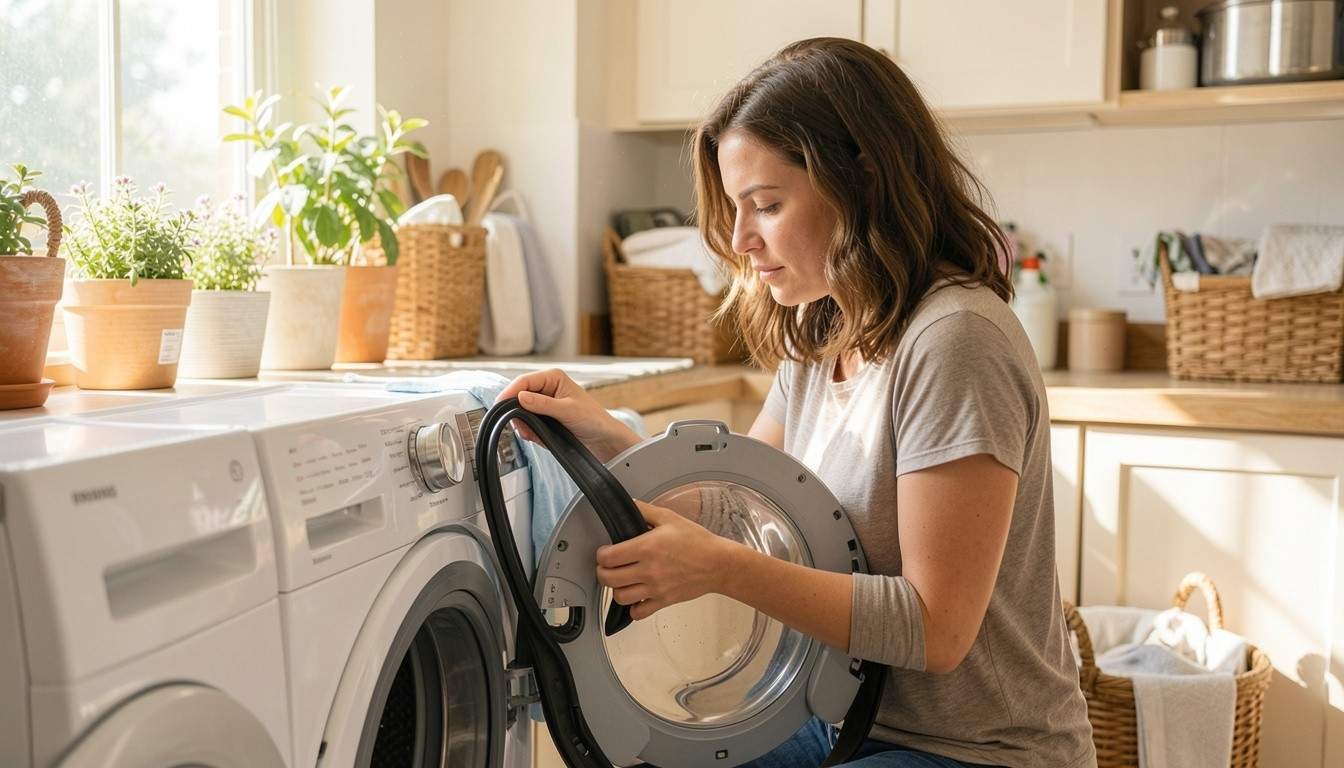
If you have a front-load washer, check the rubber gasket around the door. This ring traps water in its folds after every wash. Give it a few weeks without cleaning, and you’ll likely spot dark specks or a slimy film. That’s mold, and it’s usually the strongest source of the smell.
Detergent, Fabric Softener, and Dispenser Residue Buildup
Too much detergent or fabric softener doesn’t rinse away completely. It builds up in the drum, along the agitator, and inside the dispenser drawer. This residue turns into a food source for bacteria, which is why a washer that looks clean can still smell bad.
A Clogged Drain Pump Filter or Standing Water
Most washers have a drain filter that catches lint, hair, and small debris before it reaches the pump. When homeowners skip this step (and most do, since they don’t know it exists), trapped debris sits in stagnant water and starts to smell.
Daily Laundry Habits That Make Odor Worse
Small habits add up. Washing mostly in cold water means less heat to kill bacteria. Leaving wet clothes in the drum overnight gives mold a head start. Closing the door right after a cycle traps humidity inside instead of letting it dry out.
Front-Load vs. Top-Load Washers: Why Front-Loaders Smell Worse
If you switched from a top-load washer to a front-load model and started noticing odor issues, you’re not imagining it. The two designs handle water very differently.
The Airtight Seal and Low-Water Design
Front-load washers use less water to get the same cleaning job done, which is great for your utility bill but means less rinsing action overall. The airtight door seal that keeps water from leaking out during the wash cycle also traps humidity inside once the cycle ends.
HE Detergent Mistakes That Make Odor Worse
High-efficiency washers need HE detergent, which is formulated to produce fewer suds and rinse away with less water. Regular detergent in an HE machine leaves behind extra residue, since the washer isn’t designed to flush it out completely.
Why Top-Loaders Aren’t Fully Odor-Proof Either
Top-load machines get more air circulation and don’t have a tight door seal, so they’re less prone to trapped moisture. That said, they still need regular cleaning around the lid, agitator, and detergent tray, or they’ll develop the same problem over time.
Why Murrieta’s Hard Water Makes Washer Mildew Worse
Homeowners outside Southern California don’t always deal with this piece of the puzzle, but it matters a lot here.
Mineral Scale on Gaskets, Valves, and Dispensers
Murrieta’s municipal water supply carries a high mineral load. Calcium and magnesium deposits build up on the door gasket, the water inlet valve, and the detergent dispenser over time. If you want a deeper look at how this affects appliances across your home, this breakdown of how hard water in Murrieta affects your home appliances covers it well.
How Scale Buildup Traps Moisture and Feeds Mold
Scale deposits create a rough, porous surface that holds onto water longer than a smooth rubber gasket would. That extra moisture retention gives mold more time and more surface area to grow, which is part of why Murrieta homeowners often deal with washer odor more than homeowners in areas with softer water.
Extra Maintenance Steps for Southwest Riverside County Homes
Because of the mineral content here, plan to clean your gasket and dispenser more often than the manufacturer’s manual suggests. A monthly wipe-down goes a long way toward keeping scale and mildew from teaming up against your washer.
Mildew, Sewage, or Chemical Smell? How to Diagnose the Real Problem
Not every bad smell coming from your washer is mildew. Getting the diagnosis right saves you time and helps you avoid the wrong fix.
Musty/Mildew Smell (Mold and Bacteria)
This is the most common odor and smells damp, earthy, or stale. It usually comes from the gasket, drum, or dispenser drawer, and it responds well to a deep cleaning.
Rotten Egg/Sewage Smell (Drain or Plumbing Issue)
A sewage-like smell often points to a clogged drain line or a plumbing vent issue rather than the washer itself. If cleaning the machine doesn’t resolve it, the problem is likely downstream in your home’s plumbing.
Burning/Chemical Smell (Electrical or Mechanical Fault)
A burning smell is a different animal entirely and points to a mechanical or electrical issue, not mildew. Stop using the washer and get it inspected. If you notice unusual noises alongside the smell, this rundown of sounds your appliances should never make can help you figure out what’s going on before it becomes a bigger repair.
Why an Accurate Diagnosis Matters Before You Clean or Call for Repair
Running vinegar through a machine with a plumbing problem won’t fix anything, and calling a plumber for a dirty gasket wastes a service call. Take a minute to identify the smell type first, then match it to the right fix.
Step-by-Step: How to Get Rid of Washer Mildew Smell
Once you know mildew is the culprit, here’s how to clear it out for good.
Clean the Door Gasket and Seal
Pull back every fold of the rubber gasket and wipe it down with a mix of warm water and white vinegar. Use a cotton swab or old toothbrush to get into tight corners. If you see black mold spots, dip a cleaning-only toothbrush in diluted bleach and scrub until they disappear.
Clean the Detergent Dispenser Drawer
Remove the drawer completely and soak it in warm, soapy water. Use a small brush to clear out any caked residue in the compartments, then let it air dry before putting it back.
Run a Hot-Water Deep-Clean Cycle
If your washer has a “Clean Washer” or “Tub Clean” setting, use it with either a washing machine cleaning tablet or two cups of white vinegar poured directly into the drum. No special cycle? Run the hottest, longest cycle available instead, empty, with the same cleaning solution.
Clean the Drain Pump Filter
Locate the small access panel near the bottom front of the machine. Place a towel underneath, open the filter, and clear out any trapped lint, hair, or debris. Expect some water to spill out, since this area often holds standing water that smells worse than the rest of the machine combined.
Dry and Air Out the Drum
After cleaning, leave the door and detergent drawer open for a few hours so everything dries completely. A dry drum can’t grow mold, so this step matters as much as the cleaning itself.
Why Your Clothes Still Smell Musty After Washing
Even a full wash cycle in a dirty machine can leave your clothes smelling worse than when they went in.
How a Dirty Washer Redeposits Odor onto Laundry
Mold spores and bacteria living in the gasket, drum, or dispenser get stirred up during the wash cycle and transfer directly onto your clean laundry. Your clothes come out looking clean but carrying the same musty smell as the machine.
How to Properly Rewash Already-Smelly Clothes
Clean the washer first using the steps above, then rewash the affected items on the hottest setting the fabric care label allows. Adding a cup of white vinegar to the rinse cycle helps neutralize any lingering odor on the fabric itself.
How to Prevent Washer Mildew From Coming Back
Cleaning your washer once solves the problem for now, but a few habit changes keep it from coming back.
Leave the Door Open and Remove Laundry Promptly
Prop the door open (and pull out the detergent drawer) after every wash so the drum can air dry. Also, get into the habit of moving wet clothes to the dryer as soon as the cycle ends instead of letting them sit.
Use the Right Detergent Type and Amount
Check your owner’s manual to confirm whether your machine needs HE detergent, and measure it out rather than eyeballing it. Excess detergent is one of the biggest contributors to residue buildup, and it can also strain your machine’s pump and valves over time. Keeping your appliance running efficiently ties directly into how long it lasts, which this guide on the average lifespan of major home appliances explains in more detail.
Set a Monthly Deep-Clean Schedule
Run a hot-water cleaning cycle roughly every 30 to 40 loads, or once a month if you do laundry regularly. This one habit prevents most of the buildup that leads to mildew smell in the first place.
When to Call a Professional Appliance Repair Technician
Sometimes a deep clean isn’t enough, and that’s a sign the problem goes beyond surface-level buildup.
Signs of a Failing Gasket, Pump, or Water Inlet Valve
If the gasket looks cracked or worn instead of just dirty, or if the smell keeps returning within days of cleaning, a part may need replacing rather than cleaning.
Persistent Odor That Survives a Deep Clean
You’ve cleaned the gasket, run the hot cycle, and cleared the filter, and the smell still comes back. That points to a problem hiding somewhere you can’t easily reach on your own.
Slow Draining, Leaks, or Standing Water
Water that lingers in the drum after a completed cycle usually means a drainage issue rather than a smell issue alone, and it’s worth having a technician take a look before it leads to bigger damage.
Sewage Smell That Won’t Go Away
If you’ve ruled out the washer itself and the smell still resembles sewage, the issue is likely in your home’s drain line, and attempting a DIY fix here can turn into a costly mistake. This look at the hidden costs of DIY appliance repair explains why calling a pro early often saves money in the long run.
Washer Mildew Repair Costs in Murrieta, CA: Repair or Replace?
Once you know a part needs attention, cost becomes the next question. Pricing varies by brand and model, but here’s a general idea of what to expect.
Gasket/Seal Replacement Cost
Gasket replacement is one of the more common repairs tied to mildew smell, since a worn or torn seal traps water and can’t be fully cleaned.
Drain Pump and Filter Repair Cost
A clogged or failing drain pump often causes both the smell and slow draining at the same time, so fixing one usually resolves the other.
Water Inlet Valve Replacement Cost (Hard-Water Related)
Given Murrieta’s mineral-heavy water supply, inlet valves tend to wear out faster here than in other regions, which ties directly back into the hard water issues mentioned earlier in this guide.
When It Makes More Sense to Replace Than Repair
If your washer is older and facing multiple issues at once, repair costs can start to add up close to the price of a new unit. This guide on whether it’s worth repairing your old appliance or replacing it breaks down how to make that call with confidence.
Preventing Washer Odor in Rental Properties and Commercial Laundry
If you manage rental units or run a business with on-site laundry, washer odor becomes a tenant satisfaction issue, not just a household annoyance.
Why Shared/Commercial Washers Build Up Mildew Faster
Higher usage means more moisture cycles, more detergent residue, and less time for machines to fully dry between loads, which speeds up mildew buildup compared to a typical single-family home.
Maintenance Plans for Landlords, Property Managers, and Riverside County Businesses
A scheduled maintenance plan catches gasket wear, pump issues, and buildup before tenants start complaining, and it protects your equipment investment at the same time.
How Appliance Repair Murrieta Helps Homeowners and Businesses
If you’ve tried cleaning your washer and the smell keeps coming back, or you’re not sure whether you’re dealing with mildew, a drainage issue, or a mechanical fault, it makes sense to get a second opinion from someone who works on these machines every day. The team at Appliance Repair Murrieta has spent years working on washers across Southwest Riverside County and knows exactly how local water and climate conditions affect these machines.
Diagnostic and Repair Services for Washer Odor Issues
A trained technician can pinpoint whether your odor problem comes from a worn gasket, a failing pump, or a valve struggling under Murrieta’s hard water, then recommend the right fix instead of a guess.
Preventive Maintenance Built for Hard-Water Areas
Regular maintenance checks catch small issues, like early mineral buildup, before they turn into bigger repairs. If you’re looking for a company that understands the local water and climate conditions affecting appliances in this area, this guide to finding a trustworthy appliance repair company in Riverside County is a good place to start.
A musty washer doesn’t mean you need a new machine. Most of the time, it means the machine needs a little attention it hasn’t gotten in a while. Start with the cleaning steps above, build better daily habits, and keep an eye out for signs that point to a part wearing out rather than just dirt. If the smell sticks around after you’ve done everything right, reach out to our team and we’ll help you figure out what’s really going on.