You probably do not think about appliance lifespan until something stops working. By then, you are already dealing with a repair bill, a replacement quote, or lost time in your home or business. If you know the expected lifespan of each major appliance, you can plan maintenance better, avoid surprise failures, and get more value from every unit you own.
In Murrieta, this matters even more because hot weather, hard water, dust, and heavy HVAC use can shorten appliance life. That means a “normal” lifespan on paper may shrink if you do not keep up with care. This guide breaks down what you can expect in 2026 and shows you how to add real years of service with simple habits and smart maintenance.
If you want a related look at climate-related wear, read how the California climate impacts your appliance lifespan.
Why Appliance Lifespan Matters In 2026
Replacement costs are higher than they used to be, and repair labor keeps rising too. That means a unit that lasts two or three extra years can save you a meaningful amount of money over time. In 2026, many homeowners also face higher energy use from older, less efficient appliances, so a failing unit can hit your wallet in two directions at once.
For commercial properties, lifespan planning matters even more. A short-lived fridge, washer, or HVAC unit can interrupt operations, create tenant complaints, and increase maintenance calls. When you track lifespan early, you make better repair-versus-replace decisions instead of waiting for a full breakdown.
How Long Major Appliances Usually Last
Here is the practical range you can use in 2026:
- Refrigerator: about 10 to 15 years, sometimes longer with strong maintenance.
- Washer: about 8 to 12 years, with some models lasting longer under lighter use.
- Dryer: about 10 to 13 years, sometimes 15 years or more with good vent care.
- Dishwasher: about 8 to 12 years.
- Oven or range: about 13 to 15 years for many units, though good models can last longer.
- Microwave: about 9 to 10 years, depending on use and build quality.
- Air conditioner or heat pump: often 12 to 18 years with proper service.
- Furnace: often 15 to 20 years, depending on fuel type and maintenance.
These are averages, not promises. Brand, usage, installation quality, and local conditions all change the result.
How Murrieta Conditions Shorten Appliance Life
Murrieta heat puts extra stress on refrigeration and HVAC systems because those units run harder and longer during hot periods. Dust and dry air also affect filters, coils, and vents, which can reduce efficiency and speed up wear.
Hard water creates another problem. Calcium and magnesium buildup can coat heating elements, narrow water flow, and strain pumps, which affects dishwashers, washers, water heaters, and other water-based equipment. Recent water-treatment sources also show that softened water can extend appliance life and reduce repair frequency.
For Murrieta homes and commercial properties, that means you should not use national averages blindly. A unit in a hard-water, high-heat environment often ages faster than the same unit in a milder area.
Refrigerators And Freezers
Your refrigerator works all day, every day, so small problems add up fast. The compressor, thermostat, door seals, and condenser coils usually decide how long the unit stays useful.
You can extend refrigerator life by doing a few things:
- Clean condenser coils at least twice a year.
- Check the door gasket for cracks or loose spots.
- Keep the fridge level so the door seals correctly.
- Leave space behind and around the unit for airflow.
- Set the temperature correctly and avoid overpacking the shelves.
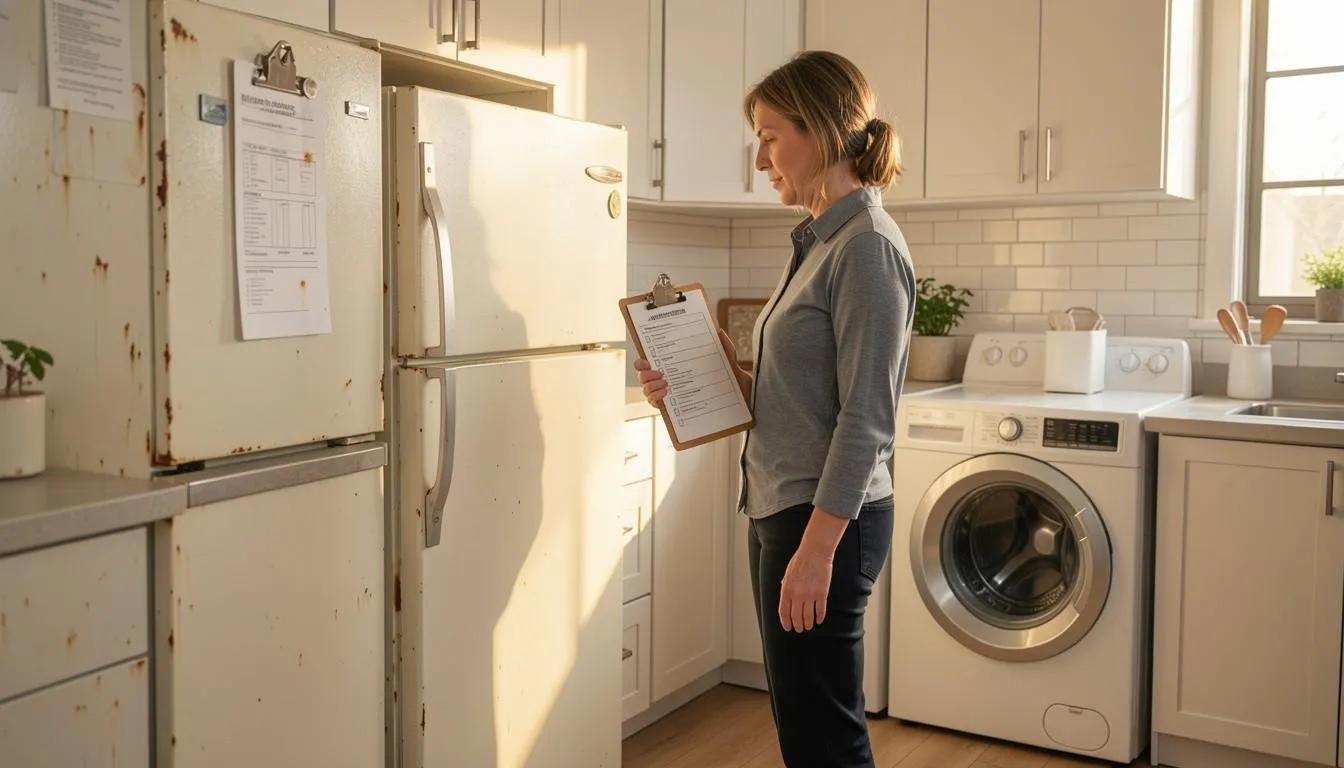
A fridge that runs constantly, makes louder-than-normal noise, or struggles to hold temperature may already be aging faster than expected. If you see those signs, compare the repair cost with the remaining lifespan before you decide what to do. If you want an early-warning checklist, top 10 signs your appliances are about to break down is a useful next read.
Washers And Dryers
Washers often last a little less than dryers because they deal with water, vibration, and moving parts at the same time. Bearings, pumps, hoses, belts, and control boards usually wear first.
You can help your washer last longer by doing this:
- Do not overload the drum.
- Check hoses for bulges, cracks, or leaks.
- Level the machine so it does not shake itself loose.
- Clean the detergent drawer and drum regularly.
- Leave the door open after use so moisture can dry out.
Dryers last longer when you keep the lint trap clean, clear the vent line, and avoid overloading the drum. A clogged vent forces the machine to work harder and can raise the heat load on key parts.
If your laundry machines are getting older and showing multiple issues, you may want to compare the repair cost against replacement. is it worth repairing your old appliance or should you replace it can help with that decision.
Dishwashers
Dishwashers usually land in the 8 to 12 year range, but hard water can cut that down if you do not manage scale. Pumps, heating elements, spray arms, float switches, and door seals are the most common wear points.
To extend dishwasher life:
- Clean the filter every month.
- Wipe mineral buildup from spray arms.
- Use the right detergent for your water quality.
- Run hot-water or descaling cycles when buildup starts.
- Load dishes correctly so water can reach every surface.
If your dishwasher leaves film, stays noisy, or fails to drain well, you should act early. Small issues often become pump or heating problems later, and those cost more to fix.
Ovens, Ranges, And Microwaves
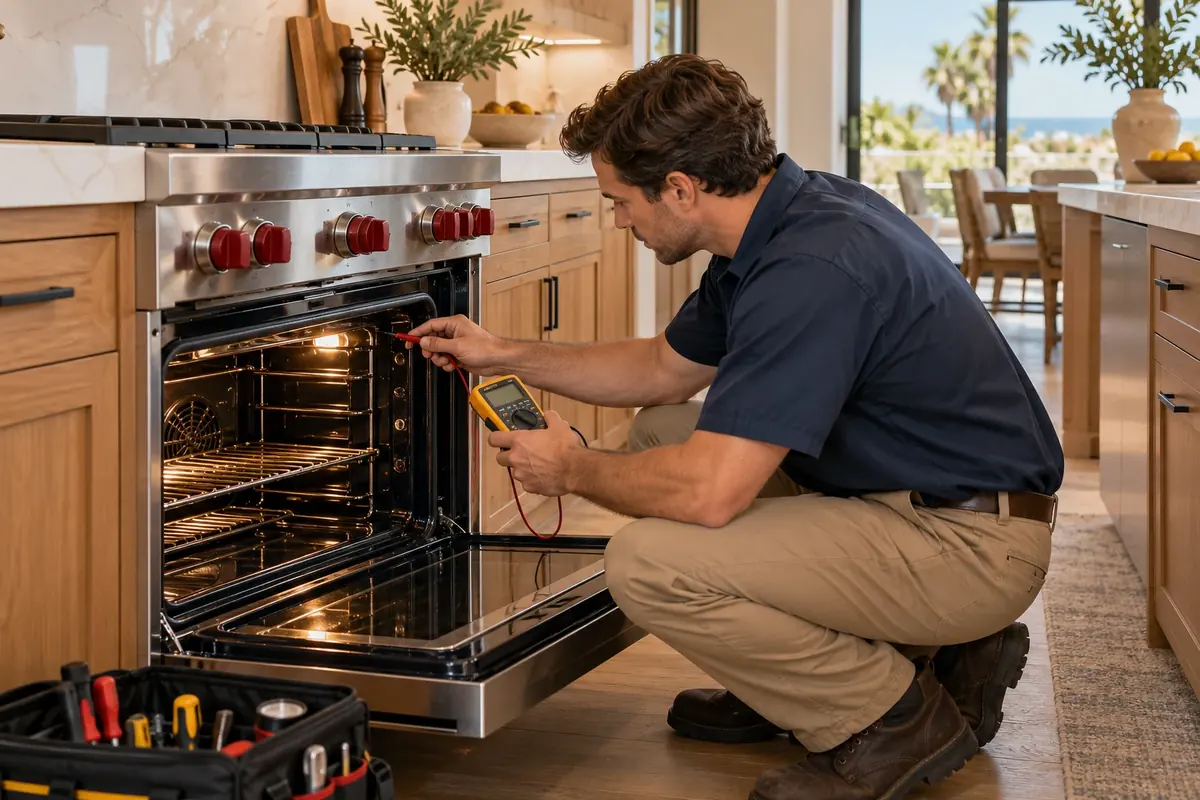
Ovens and ranges usually last longer than laundry appliances because they do not face the same water and vibration stress. Still, igniters, heating elements, thermostats, control boards, and knobs can fail with age.
You can extend life by:
- Cleaning spills quickly before they bake onto surfaces.
- Avoiding harsh chemicals on control panels.
- Keeping oven vents clear.
- Checking gas burners and ignition behavior early.
- Scheduling service if heat becomes uneven or slow.
Microwaves often fail from door switch problems, control board wear, or heavy daily use. If you use one in a commercial space, short cycles and frequent use can shorten the usable life faster than a home kitchen would.
HVAC Systems
HVAC systems need special attention in Murrieta because they carry a heavy cooling load during hot seasons. Air conditioners and heat pumps commonly last about 12 to 18 years, while furnaces can last 15 to 20 years if you service them well.
To extend HVAC life:
- Replace filters on schedule.
- Keep the outdoor unit clear of dust and debris.
- Clean coils so the system can exchange heat properly.
- Keep supply and return vents open.
- Schedule seasonal tune-ups before peak weather hits.
If you want more local context on airflow, outdoor unit protection, and climate fit, see choosing the right HVAC system for Murrieta’s microclimate and protecting your outdoor HVAC unit from local wildlife and debris.
Hard Water And Scale Buildup
Hard water is one of the biggest hidden causes of early appliance failure. Minerals build up inside heating elements, pumps, valves, and pipes, which forces appliances to work harder and run less efficiently. Water-treatment sources in 2026 continue to show that softening and filtration can improve appliance longevity and cut maintenance needs.
This matters most for:
- Dishwashers.
- Washers.
- Water heaters.
- Coffee makers.
- Steam-based appliances.
If your water leaves residue on glassware or fixtures, your appliances may already be paying the price. A softener or filtration system can give you a real return if buildup is a recurring issue.
When Repair Makes Sense And When It Does Not
Age alone does not tell the whole story. A 12-year-old refrigerator with one failed fan may still be worth repairing, while a 9-year-old unit with a compressor problem may not be. The same logic applies to washers, dryers, and HVAC systems.
A repair usually makes sense when:
- The appliance is in the first half of its expected life.
- The failure is isolated.
- The repair cost is much lower than replacement.
- The unit still runs efficiently after the fix.
Replacement usually makes sense when:
- The appliance has several failing parts.
- The repair cost is high compared with the remaining lifespan.
- The unit wastes energy or water.
- The same problem keeps coming back.
For commercial clients, replacement planning should start before failure. That approach keeps downtime low and gives you more control over budget timing.
A Simple Maintenance Schedule
You do not need a giant maintenance plan. You need a consistent one.
Monthly:
- Clean dishwasher filters.
- Empty lint traps.
- Check refrigerator and freezer temperatures.
- Look for leaks under sinks and appliances.
Quarterly:
- Inspect hoses, cords, seals, and vents.
- Wipe dust from appliance surfaces and accessible coils.
- Check outdoor HVAC unit clearance.
- Run a descaling cycle if hard water is a problem.
Yearly:
- Service HVAC systems before peak summer.
- Deep-clean refrigerator coils.
- Inspect washer hoses and dryer vents.
- Review appliance age and repair history.
This kind of routine protects both residential and commercial equipment because it catches small wear before it becomes failure.
How A Local Repair Company Helps You Extend Lifespan
A good appliance repair company does more than fix breakdowns. It helps you spot age-related wear, keep efficiency high, and decide if a repair will really buy you time. That matters in Murrieta, where climate and water quality can shorten the useful life of major appliances.
Appliance Repair Murrieta can help you with home appliance repair, plus the kind of maintenance advice that adds real years to a system. If you keep a local service partner in your corner, you make better repair decisions, lower total ownership costs, and reduce the chance of emergency replacements.
If your appliance is getting older, making new noises, or losing performance, do not wait for full failure. A quick diagnostic visit can tell you whether a repair still makes sense or whether replacement will save you more over time. For Murrieta homeowners, landlords, and commercial property managers, that is often the smartest way to protect both budget and uptime.
If you want to compare this topic with energy cost impact, why is my electric bill so high, faulty appliances could be to blame is a strong companion guide.