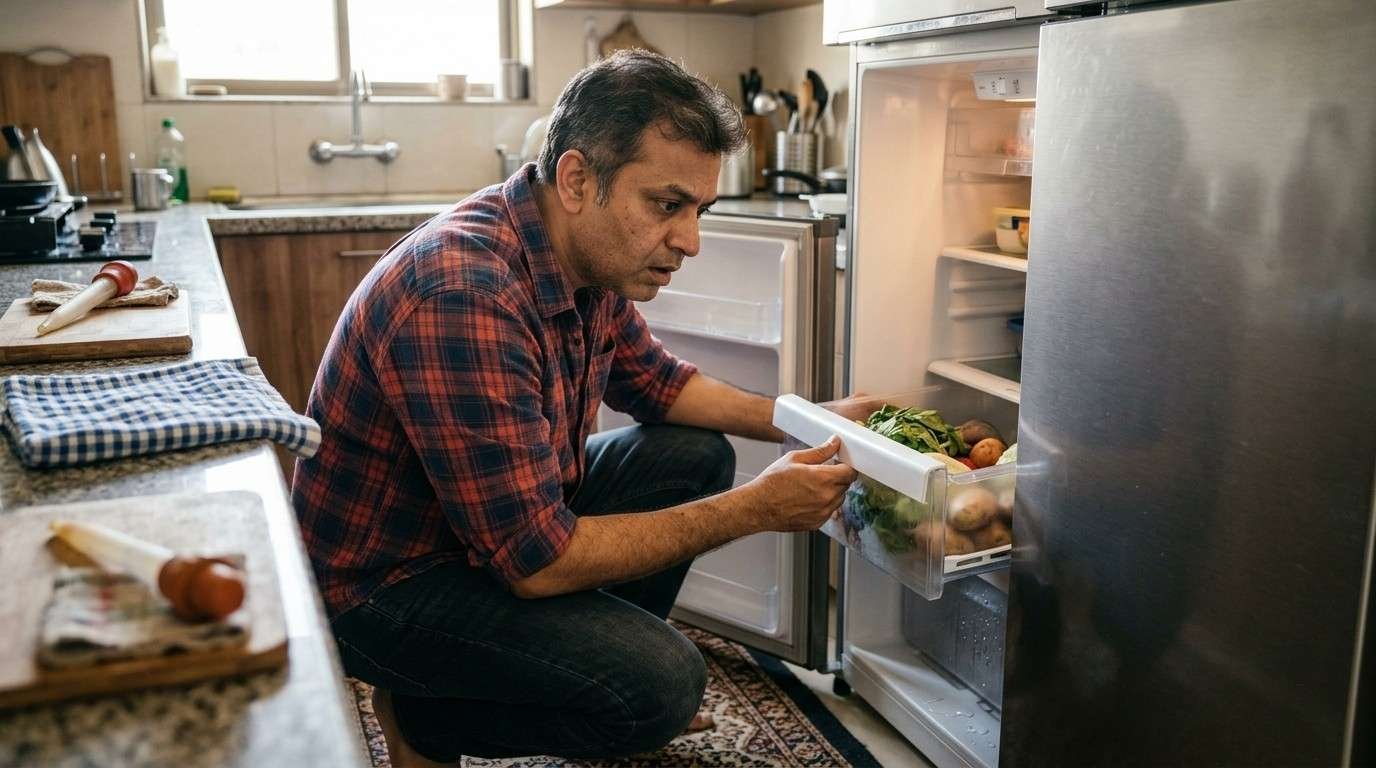
You open the crisper drawer to grab some vegetables and find a puddle of water sitting underneath it. Or maybe you notice a thin sheet of ice creeping across the back of your freezer floor. Either way, water where it shouldn’t be is one of the most common refrigerator complaints homeowners deal with, and thankfully, one of the more fixable ones.
This guide walks you through exactly why it happens, how to figure out the real cause, and what to do about it before it turns into a bigger problem.
How Your Refrigerator’s Defrost System Is Supposed to Work
Before troubleshooting the leak, it helps to understand the system behind it, since most leaks trace back to one specific part of how your fridge stays frost-free.
The Automatic Defrost Cycle, Explained Simply
Modern refrigerators run a hidden defrost cycle several times a day. This briefly warms the evaporator coils just enough to melt any frost that’s built up, keeping the coils clear so cold air keeps flowing properly.
Where the Meltwater Is Supposed to Go
That melted frost is supposed to drip into a small trough, travel down a narrow drain tube, and land in a shallow pan near the compressor, where it evaporates harmlessly into the air.
Why This System Is More Fragile Than Most Homeowners Realize
The drain tube at the center of this whole process is often no wider than a pencil. Food debris, a stray crumb, or a small chunk of ice is all it takes to block it completely, which is exactly why this one small part causes such a large share of fridge leaks.
Top Causes of Water Leaking Inside the Fridge
Once you understand the defrost system, it’s easier to see why these particular causes show up again and again.
A Clogged or Frozen Defrost Drain
This is by far the most common cause of water pooling inside a refrigerator. Once the drain tube gets blocked, meltwater has nowhere to go and backs up into the fridge compartment instead.
A Worn or Dirty Door Gasket Letting in Humid Air
A gasket that no longer seals properly allows warm, humid air to enter the fridge. That extra moisture condenses on cold surfaces and can show up as water on shelves or along the door itself, a pattern similar to what drives constant compressor running, covered in this guide on why your refrigerator is running constantly.
A Cracked or Overflowing Drain Pan
The drain pan beneath the fridge holds water until it evaporates. If it’s cracked, rusted, or simply too full, water can drip out from underneath rather than evaporating as designed.
A Faulty Water Line or Ice Maker Connection
If your fridge has an ice maker or water dispenser, a loose fitting or damaged line can leak directly into the fridge or onto the floor nearby, independent of the defrost system entirely.
A Failing Defrost Heater or Thermostat
The defrost heater is responsible for melting frost during each cycle. If it fails, ice can build up excessively and eventually melt unevenly, sending water somewhere it isn’t supposed to go.
An Unlevel Refrigerator
A fridge that isn’t sitting level can cause the internal drain system to function incorrectly, since it relies on gravity to move water where it needs to go.
Where the Water Is Pooling Tells You a Lot
The exact location of the water is one of the best clues you have for narrowing down the cause before you start any repair work.
Water Under the Crisper Drawers
This is the classic sign of a clogged defrost drain. Meltwater that can’t reach the drain tube backs up and pools at the bottom of the fresh food compartment instead.
Water on the Freezer Floor With Ice Buildup
If you’re seeing both water and a thin layer of ice on the freezer floor, that combination usually points to a drain that’s frozen solid rather than simply clogged with debris.
Water Near the Ice Maker or Dispenser
Water specifically near the ice maker or dispenser area, rather than spread across the fridge, points toward a water line or connection issue instead of the defrost system.
Water Along the Bottom Door Seal
Water pooling right along the bottom edge of the door often indicates a gasket that isn’t sealing properly, letting condensation form right where the door meets the cabinet.
How to Diagnose the Real Cause Before You Fix Anything
A few quick checks help you confirm the cause before you start taking anything apart.
Unplug and Inspect Before You Touch Anything
Always unplug the refrigerator before inspecting or working on any internal component. This protects you and makes it easier to see what’s actually going on without the compressor running.
Check for Ice Blocking the Drain Opening
Look at the small drain opening at the back of the freezer, usually near the bottom, for visible ice or debris sitting directly in the opening.
Test the Door Seal for a Proper Fit
Close the door on a piece of paper or a dollar bill so it’s halfway inside, then pull it out. If it slides out with little resistance, the gasket likely isn’t sealing as tightly as it should.
Isolate the Ice Maker by Shutting Off Its Water Supply
If you suspect the ice maker, shut off its water supply valve for a day and see if the leak stops. This quickly confirms or rules out the water line as the source.
How to Clear a Clogged Defrost Drain Yourself
Since this is the most common cause, it’s worth knowing exactly how to clear it safely on your own.
Tools You’ll Need
A turkey baster or small funnel, warm water, and a flexible wire or pipe cleaner are usually all you need for this job.
Locating the Drain Opening
Check your owner’s manual to confirm the exact location, but most models place the drain opening at the bottom back wall of the freezer, sometimes behind the crisper drawers in the fridge compartment.
Flushing the Drain With Warm Water
Use the turkey baster to send warm water directly into the drain opening. In most cases, this alone is enough to clear food debris or loosen a minor clog.
Clearing Stubborn Clogs Without Damaging the Tube
If warm water alone doesn’t work, gently feed a flexible wire or pipe cleaner into the opening to break up the blockage, being careful not to force it too hard or puncture the tube.
Other DIY Fixes Worth Trying First
Beyond the drain itself, a few other simple checks are worth ruling out before assuming you need a bigger repair.
Cleaning and Reseating the Door Gasket
Wipe down the gasket with warm, soapy water to remove any residue, then make sure it’s sitting flush against the door frame all the way around.
Emptying and Cleaning the Drain Pan
Locate the drain pan, usually accessible from behind a lower panel, and empty and clean it if it’s full or showing signs of buildup.
Checking the Water Line for Kinks or Leaks
Pull the fridge away from the wall and inspect the water line for any visible kinks, cracks, or loose fittings that could be causing a leak.
Leveling the Refrigerator
Use a bubble level to check that the fridge sits evenly, then adjust the leveling feet if needed so the internal drainage system can work the way it’s designed to.
When the Leak Points to a Bigger Repair
If the DIY checks don’t resolve it, these signs point toward something that needs professional attention.
The Clog Keeps Coming Back After Flushing
If you’ve cleared the drain but water keeps returning within days or weeks, something deeper in the system, like a failing heater or a misaligned component, is likely the underlying cause.
Ice Forms Repeatedly at the Same Spot
Recurring ice buildup in the exact same location, even after clearing it, often points to a defrost heater that isn’t functioning correctly rather than a simple debris clog.
Water Appears Near Electrical Components or the Compressor
If you notice water anywhere near wiring or the compressor area, stop and treat this as a priority. This is exactly the kind of situation covered in this guide on why you shouldn’t ignore a shocking appliance.
The Drain Pan or Line Is Physically Damaged
A cracked pan or a damaged water line usually needs a replacement part rather than a cleaning, which is a straightforward repair for a professional but not always simple to source and install yourself.
Why Ignoring a Fridge Leak Costs You More Than a Puddle
A small leak might seem easy to live with, but letting it continue causes real problems beyond the mess itself.
Water Damage to Flooring and Cabinetry
Ongoing leaks can warp flooring, damage cabinetry, and cause lasting harm to the surrounding area if left unaddressed for too long.
Mold Risk From Ongoing Moisture
Persistent moisture creates the exact conditions mold needs to grow, both inside the fridge and in the surrounding cabinetry, a concern that mirrors similar moisture issues found in front-load washers, explained in this guide on why your washer smells like mildew.
Food Safety Concerns If Cooling Is Also Affected
If the underlying cause is also affecting the fridge’s ability to maintain temperature, that puts your food at risk well before you’d notice a cooling problem on its own.
Repair Costs for Common Leak Causes
Once you’ve identified the likely cause, cost becomes the next natural question. Here’s a general idea of what factors into pricing.
Cost to Clear or Repair a Defrost Drain
Clearing a simple clog is typically one of the more affordable fixes, while repairing a drain that requires disassembly costs a bit more due to the added labor.
Cost to Replace a Door Gasket
Gasket replacement tends to be a moderate repair, mainly involving the cost of the part itself along with straightforward installation labor.
Cost to Replace a Drain Pan or Water Line
These repairs vary depending on accessibility and whether the part needs to be special-ordered for your specific model.
When Repair Costs Signal It’s Time to Replace the Refrigerator
If your fridge is already older and facing this issue alongside other problems, it’s worth weighing repair costs against the value of a new unit. This guide on whether it’s worth repairing your old appliance or replacing it can help you think through that decision.
How to Prevent Future Leaks
A few simple habits go a long way toward keeping this from becoming a recurring problem.
Flush the Drain Periodically as Routine Maintenance
Flushing the defrost drain with warm water every few months, even before you notice a problem, helps prevent debris from building up to the point of a full clog.
Keep Food From Blocking the Drain Opening
Be mindful of how far back you push items in the freezer, since food packages sitting directly against the drain opening area increase the odds of it clogging.
Check the Door Seal a Few Times a Year
A quick seal check a few times a year catches gasket wear early, before it turns into a bigger source of condensation and leaking.
Schedule an Annual Professional Defrost System Check
A yearly inspection catches early signs of heater or thermostat wear that aren’t visible from the outside, much like the routine upkeep covered in this guide on maintaining your washer and dryer for peak performance, applied here to your refrigerator instead.
When to Call a Professional Appliance Repair Technician
Some situations call for a professional rather than continued troubleshooting on your own.
You Can’t Locate or Access the Drain Yourself
If you’ve checked your owner’s manual and still can’t find or reach the drain opening on your specific model, a technician can locate and clear it far more efficiently.
The Repair Requires Removing Internal Panels or Accessing the Sealed System
Some repairs go beyond a simple flush and require removing internal panels or components that aren’t designed for regular homeowner access, which is where professional experience matters most.
Water Damage Has Already Started Affecting Your Kitchen
If you’re noticing warped flooring, damaged cabinetry, or a musty smell developing nearby, it’s time to address both the leak and the damage together rather than letting it continue. If you’re dealing with an ongoing leak you can’t resolve, reach out to our team and we can help you get to the bottom of it.
A puddle inside your fridge is annoying, but it’s almost never a mystery once you know where to look. Start with the defrost drain, since that single small part is responsible for the vast majority of these leaks, then work through the door seal and water line if the problem continues.
The team at Appliance Repair Murrieta has helped homeowners across the area track down everything from a simple clogged drain to a failing defrost heater, so you don’t have to keep guessing where that water is actually coming from.