You probably don’t think about your washer and dryer until something goes wrong. That’s normal, these machines are built to run in the background of your life, not demand attention. But a little regular care goes a long way toward keeping them running efficiently, cleaning better, and lasting years longer than they would otherwise.
This guide walks you through exactly what maintenance actually matters, how often to do it, and what happens when you skip it.
What “Peak Performance” Actually Looks Like
Before diving into the how-to, it helps to know what you’re actually aiming for. Peak performance isn’t just about avoiding breakdowns, it shows up in everyday results you can actually notice.
Faster Cycle Times and Better Cleaning Results
A well-maintained washer and dryer finish cycles in the time they’re supposed to, without needing a second run to get clothes clean or dry. If you’ve noticed cycles creeping longer over time, that’s often the first sign maintenance has slipped.
Lower Energy and Water Usage Per Load
Clean filters, clear vents, and properly functioning components all help your machines use energy and water the way they were designed to, rather than working harder to compensate for buildup or restriction.
Fewer Repairs and a Longer Appliance Lifespan
Consistent care reduces strain on the parts that wear out fastest, like belts, pumps, and heating elements, which directly extends how long your machines last before needing real repair work.
After Every Load: The Habits That Matter Most
A few simple habits, done consistently, prevent more problems than any single deep clean ever will.
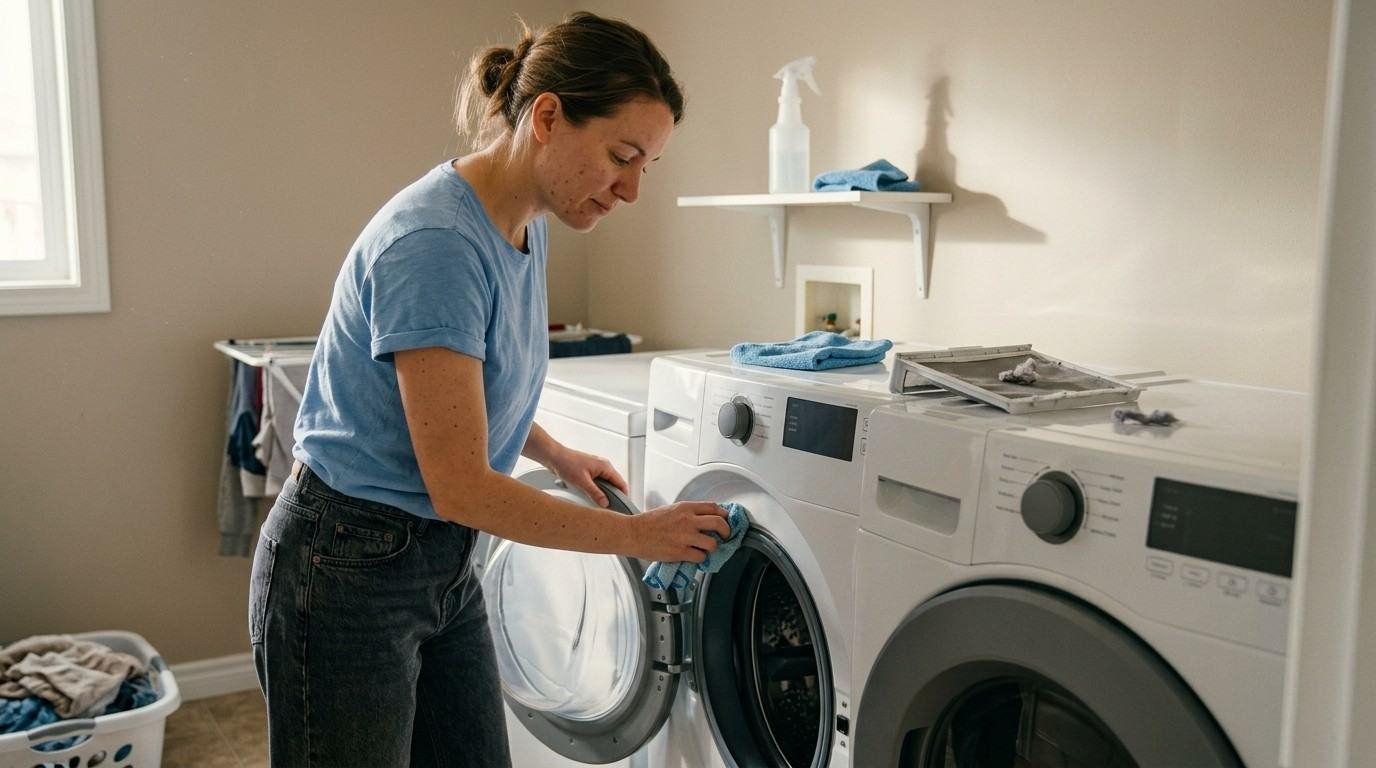
Clean the Dryer Lint Filter Every Time
This takes just a few seconds and remains the single most effective habit for keeping your dryer running efficiently. Skipping it even once or twice a week adds up fast.
Leave the Washer Door and Detergent Drawer Open
Closing the washer door right after a cycle traps moisture inside, which creates the exact conditions mold and mildew need to grow. This habit alone prevents one of the most common washer complaints homeowners deal with, covered in more detail in this guide on why your washer smells like mildew.
Remove Wet Laundry Promptly
Leaving a finished load sitting in the washer for hours gives bacteria and odor a head start. Moving clothes to the dryer soon after the cycle ends keeps both moisture and smell from becoming a problem.
Weekly and Monthly Washer Maintenance
Beyond the daily habits, your washer needs a bit more attention on a regular schedule to stay in good shape.
Wipe Down the Door Gasket and Drum
If you have a front-load washer, wipe down the folds of the door gasket weekly to prevent moisture and residue from building up where you can’t easily see it.
Clean the Detergent Dispenser Drawer
Remove the drawer monthly and rinse it with warm water to clear out caked detergent and fabric softener residue that builds up over time.
Run a Hot-Water Cleaning Cycle
Once a month, run your washer’s cleaning cycle, or a regular hot cycle with a cup of white vinegar, to clear out residue that regular washing doesn’t fully rinse away.
Check and Clear the Drain Pump Filter
Most washers have a small access panel near the bottom front that houses the drain pump filter. Checking it monthly catches lint, coins, and small debris before they cause a bigger drainage issue, the kind covered in this breakdown of top reasons your washing machine won’t drain.
Weekly and Monthly Dryer Maintenance
Your dryer needs similar attention, with a slightly different set of tasks focused on airflow and heat.
Deep-Clean the Lint Trap and Housing
Beyond the daily filter wipe, use a long-handled brush monthly to clear lint from the trap housing itself, an area the screen alone doesn’t reach.
Wipe Down Moisture Sensor Bars
Dryer sheets leave behind a residue that coats the sensor bars over time, which can cause the dryer to misread when clothes are actually dry. A quick wipe with rubbing alcohol every few months keeps readings accurate.
Check the Vent Hose Behind the Machine
Pull the dryer away from the wall occasionally to confirm the vent hose isn’t kinked, crushed, or disconnected, since even a partially blocked hose restricts airflow significantly.
Confirm the Dryer Is Level and Has Proper Clearance
A dryer that’s not sitting level or pushed too close to the wall can develop unusual noise or airflow issues over time. If you’ve noticed new squeaking or thumping, this guide on troubleshooting noisy dryers walks through what different sounds usually mean.
Seasonal and Annual Maintenance Tasks
A few tasks only need attention once or twice a year, but they matter just as much as the routine ones.
Schedule a Professional Dryer Vent Cleaning
Even with regular filter cleaning, lint accumulates inside the vent system itself. An annual professional cleaning clears buildup you can’t reach on your own and reduces fire risk significantly, a topic worth understanding fully in this guide on dryer vent fire hazards and why vent cleaning matters.
Inspect Washer Hoses for Cracks or Bulging
Check the water supply hoses behind your washer at least once a year. A cracked or bulging hose is one of the leading causes of unexpected water damage in a home.
Check Washer Leveling and Feet Wear
An unlevel washer works harder and wears out faster over time. A quick annual check with a bubble level, along with inspecting the feet for wear, keeps the machine running smoothly.
Have a Technician Inspect Belts, Rollers, and Pumps
An annual professional inspection catches wear on components you can’t easily see yourself, like drum rollers, belts, and pump seals, before they turn into a bigger repair.
Maintenance Mistakes That Undo Your Efforts
Even homeowners who mean well sometimes make a few common mistakes that quietly work against everything else they’re doing right.
Using the Wrong Detergent Type
Using regular detergent in a high-efficiency washer leaves behind excess residue, since HE machines are designed to rinse with less water. Always check what your specific model requires.
Overloading Either Machine
Packing too many clothes into either machine restricts airflow and water circulation, forcing both appliances to work harder and wear out faster than they should.
Assuming a Clean-Looking Vent Is a Safe Vent
A vent opening that looks clear on the outside can still have significant buildup further down the line. Visual inspection alone isn’t enough to confirm a vent is actually clear.
Ignoring Small Changes in Sound or Performance
A slightly longer drying time or a faint new noise is often the earliest warning sign of a developing problem. This is exactly the kind of early signal worth paying attention to across all your appliances, not just laundry machines, as covered in this list of signs your appliances are about to break down.
Why Murrieta’s Water and Climate Change the Maintenance Equation
Local conditions here add a few extra factors that homeowners in other regions don’t need to think about as much.
Hard Water’s Effect on Washer Components
Murrieta’s water supply carries a high mineral content, which builds up on gaskets, valves, and dispensers over time. This local factor deserves its own attention, and this guide on how hard water in Murrieta affects your home appliances explains exactly how it happens.
Dry Climate and Garage Installations
Many homes in this area keep the dryer in the garage, where temperature swings between hot and cool can affect rubber components like belts and rollers faster than in a climate-controlled laundry room.
Why Local Conditions Call for a Slightly Tighter Schedule
Given the mineral content in local water and the temperature swings common in garage installations, it’s worth cleaning gaskets, dispensers, and vent components a bit more often than the standard manufacturer guidance suggests.
What Good Maintenance Actually Saves You
Beyond the obvious performance benefits, consistent maintenance protects your wallet in ways that aren’t always immediately obvious.
How Preventive Maintenance Costs Compare to Reactive Repairs
A quick filter cleaning or annual inspection costs far less than replacing a failed pump, belt, or heating element. Preventive care is almost always the cheaper path over the life of the appliance.
Avoiding Water Damage Costs From Neglected Hoses
A burst supply hose can cause significant water damage to flooring and nearby walls in a short amount of time. Catching a cracked hose during a routine check avoids a repair bill that goes well beyond just the appliance itself.
Protecting Your Warranty Coverage
Some manufacturer warranties require documented regular maintenance to remain valid. Skipping upkeep can leave you covering a repair cost that should have been covered under warranty.
When Maintenance Isn’t Enough
Even with a solid routine, there comes a point where cleaning and basic upkeep can’t fix what’s actually wrong.
Performance Issues That Persist Despite Regular Care
If you’re staying on top of maintenance but still noticing longer cycles, weaker cleaning, or inconsistent drying, something mechanical is likely at play rather than a maintenance gap.
Signs a Component Has Already Started Failing
Grinding noises, a dryer that runs hotter than usual, or a washer that vibrates excessively despite being level are all signs a specific part needs attention, not just cleaning. If you’ve noticed heat issues specifically, this guide on why your dryer might be getting too hot can help you figure out what’s going on.
When a Professional Tune-Up Makes More Sense Than DIY Alone
Some components, like belts, bearings, and internal seals, are difficult to inspect and replace without the right tools and experience. A professional tune-up catches issues a homeowner’s routine simply can’t reach.
If your machines haven’t had a proper checkup in a while, the team at Appliance Repair Murrieta can help you get ahead of small issues before they turn into bigger ones.
A well-maintained washer and dryer don’t require a huge time investment, just a handful of consistent habits done at the right intervals. Clean the filters, check the hoses, and pay attention when something feels a little off.
Those small actions add up to real savings on your utility bills, fewer surprise repairs, and appliances that simply last longer. If you’d rather have a professional handle the annual inspection and catch anything you might miss, reach out to our team and we’ll help keep both machines running the way they should.